
You’ve got $10,000 – maybe $50,000 – to put into your home. The question isn’t whether to invest in improvements. It’s which improvements will actually pay you back.
Not every renovation is created equal. Some upgrades return more than you spend. Others barely move the needle on resale value, no matter how much you pour into them. And if you’re a Michigan homeowner, your calculation looks different than someone in Arizona or Florida. Our freeze-thaw cycles, lake-effect snow loads, and aging housing stock all change which projects make the most financial sense.
We dug into the 2025 Cost vs. Value Report from Zonda and the Journal of Light Construction – the industry’s most respected annual study comparing renovation costs to resale value across 119 U.S. markets, including Detroit and Ann Arbor. We combined that data with what we’ve learned from decades of working on homes across Southeast Michigan to put together this list.
These are the home improvements that consistently deliver the strongest return on investment for Michigan homeowners – ranked from highest ROI to lowest.
📊 Quick-Reference: Home Improvement ROI at a Glance
| Project | Average Cost | National ROI |
|---|---|---|
| 1. Garage Door Replacement | $2,300 – $4,700 | 268% |
| 2. Steel Entry Door | ~$2,400 | 216% |
| 3. Siding Replacement | $15,000 – $45,000 | 153 – 171% |
| 4. Manufactured Stone Veneer | ~$11,000 | 208% |
| 5. Roof Replacement | $8,000 – $15,000+ | 65 – 75% |
| 6. Minor Kitchen Remodel | $15,000 – $35,000 | 96% |
| 7. Bathroom Remodel | $18,000 – $35,000 | 74% |
| 8. Basement Finishing | $50,000 – $75,000 | 71% |
| 9. Deck Addition | $3,600 – $30,000+ | 45 – 55% |
| 10. Energy Efficiency Upgrades | Varies widely | 68 – 100%+ |
Source: 2025 Cost vs. Value Report (Zonda/JLC). ROI figures are national averages; East North Central region (including Michigan) may vary slightly. Costs reflect typical ranges for Southeast Michigan.
🚗 1. Garage Door Replacement
What kind of ROI does a garage door replacement provide?
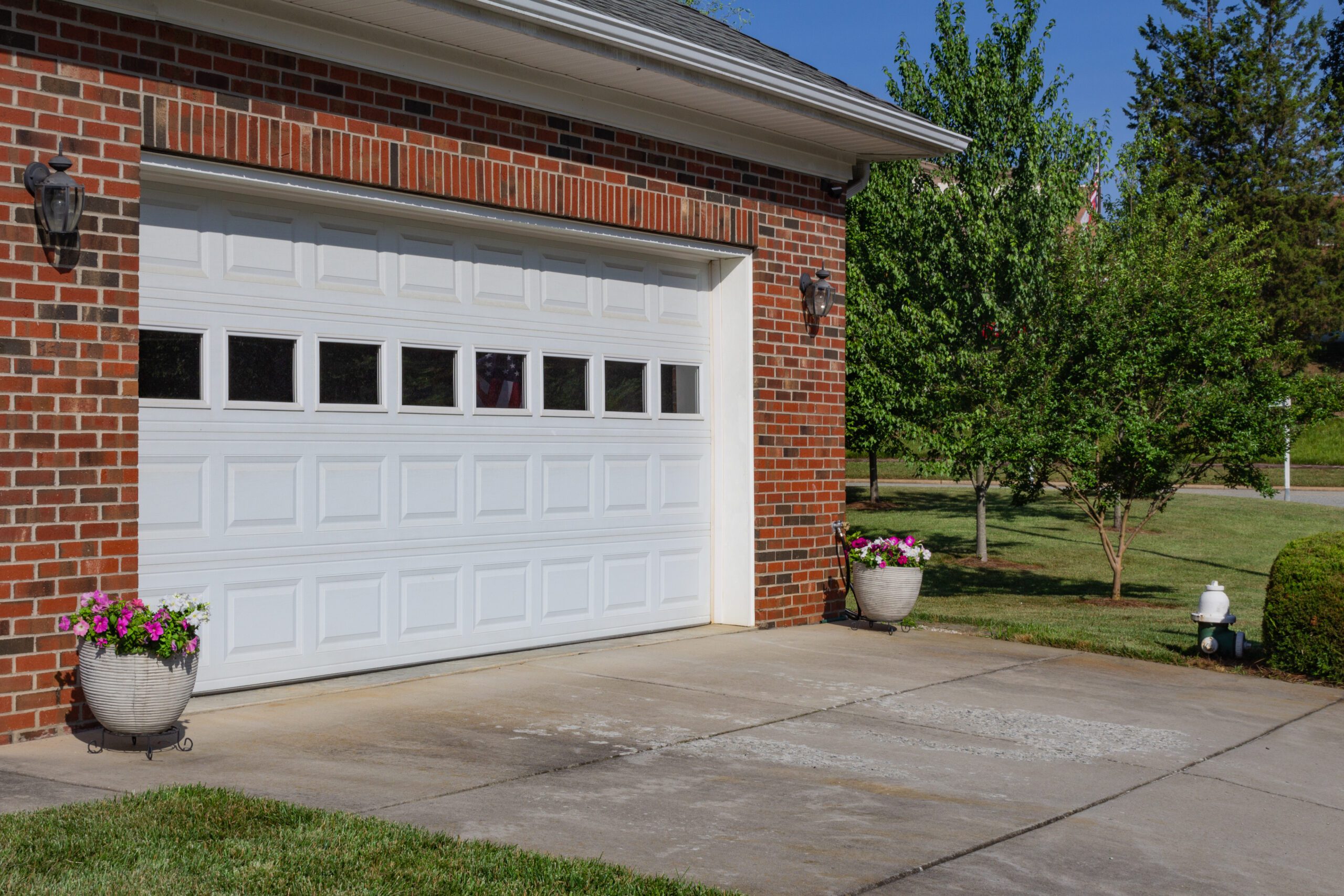
A new garage door is the single highest-ROI home improvement project you can make. According to the 2025 Cost vs. Value Report, garage door replacement delivers a return of approximately 268% nationally – meaning homeowners recoup more than double their investment at resale (Fixr, 2025). That’s up from 194% in the 2024 report, making it the top performer for the second consecutive year.
The average project cost runs between $2,300 and $4,700, making it one of the most affordable upgrades on this list. For that relatively modest investment, you’re transforming the largest visible element on the front of most homes.
Why does it matter so much in Michigan?
Think about how many homes in Metro Detroit have attached garages facing the street. That garage door can account for up to 30% of your home’s front facade. When it’s dented, faded, or visually outdated, it drags down the entire look of the property.
Beyond curb appeal, a modern insulated garage door helps with energy efficiency – something Michigan homeowners care about when January temperatures drop below zero. Insulated steel or composite doors seal tighter, reduce drafts into adjacent living spaces, and improve security.
A well-installed garage door is also one of the fastest projects to complete. Most replacements take less than a day, so the disruption to your life is minimal compared to the payoff.
🚪 2. Steel Entry Door Replacement
Is replacing your front door worth it?
Replacing your front door with a new insulated steel unit ranks second nationally, with an ROI of approximately 216% according to the 2025 Cost vs. Value Report (Zonda, 2025). The average cost sits around $2,400, and that investment can return over $5,200 in resale value.
Steel entry doors are one of the rare home upgrades that can actually pay for themselves and then some. A quality 20-gauge steel door improves security, tightens your home’s thermal envelope, and delivers an immediate visual upgrade that buyers notice the moment they walk up to your house.
Michigan-specific considerations
Our weather puts front doors through a beating that homeowners in milder climates don’t experience. Constant exposure to moisture, freezing temperatures, ice, and road salt creates conditions where wooden doors warp, swell, and deteriorate faster. Steel holds up to these conditions with minimal maintenance – it won’t rot, warp, or crack the way wood can over Michigan winters.
If steel feels too industrial for your taste, fiberglass entry doors offer another solid option. They cost more upfront and don’t return quite as high a percentage, but they resist rust entirely and can mimic the look of natural wood grain. Both are significant upgrades over an aging wooden door that’s letting cold air pour into your foyer every winter.
🏠 3. Siding Replacement
Does new siding increase home value?
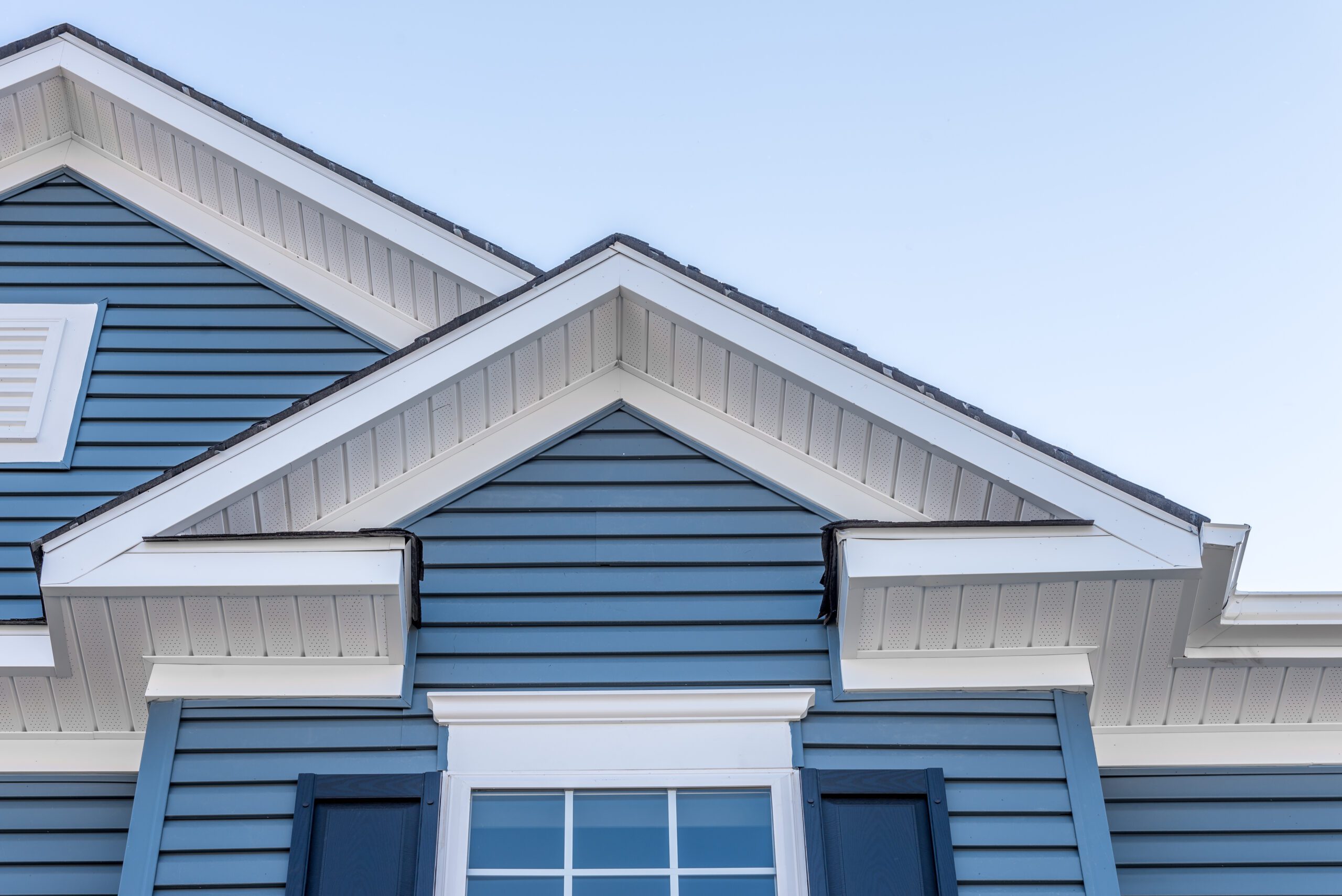
New siding consistently ranks among the top exterior improvements for ROI. Vinyl siding replacement returns roughly 171% nationally, while fiber cement siding (like James Hardie) returns approximately 153% according to 2025 data (JLC, 2025). The cost ranges are wider here – vinyl siding for an average home runs $15,000 to $25,000, while fiber cement ranges from $25,000 to $45,000 – but the returns are strong across the board.
Siding does more than look good. It’s your home’s primary weather barrier, and when it’s failing, water infiltration becomes a real threat. You’d be surprised how many homeowners think they have a roof leak when the actual culprit is deteriorated siding allowing water to work its way behind the exterior wall and down into the interior.
What siding materials work best for Michigan homes?
Michigan’s climate extremes – from sub-zero winters to humid 90-degree summers – narrow the field of materials that perform well long-term.
Vinyl remains the most popular choice for budget-conscious homeowners. Modern vinyl products are far more durable than what was available even 15 years ago, and quality products from manufacturers like CertainTeed carry 30-35 year warranties.
James Hardie fiber cement is gaining popularity across Metro Detroit for homeowners who want premium durability. It handles our temperature swings without expanding and contracting the way vinyl can, and it resists moisture, pests, and fire. The upfront cost is higher, but the longevity and curb appeal often justify the premium.
Diamond Kote steel-based siding is another option worth considering. It combines factory-applied finish with steel durability for a product that requires very little maintenance over its lifetime.
Regardless of material, the installation process matters as much as the product itself. Proper removal of old siding, thorough inspection and repair of the underlying sheathing, and correct installation technique all determine whether your new siding performs as designed or develops problems down the road.
🪨 4. Manufactured Stone Veneer
What ROI can you expect from adding stone veneer?
Manufactured stone veneer installation returns approximately 208% nationally according to the 2025 Cost vs. Value Report (Zonda, 2025). The typical project involves adding stone veneer to the lower third of a home’s front facade – replacing vinyl siding with stone in that bottom section – at an average cost of around $11,000.
This is one of those projects where the visual impact far exceeds what the numbers suggest. A home that had plain siding from ground to roofline suddenly looks like it belongs in a higher price bracket. Real estate professionals consistently rank stone veneer as one of the features that most influences a buyer’s perception of quality and value.
How stone veneer performs in Michigan
Manufactured stone veneer products are engineered to handle freeze-thaw cycles, which makes them well-suited for Michigan installations. The key is proper installation – particularly the moisture barrier and flashing details at the transition point between the stone and the siding above it. Water getting behind the veneer in fall and then freezing in winter can cause serious damage if the installation wasn’t done correctly.
This is one project where cutting corners on installation to save money can cost you significantly more in repairs later. When done right, stone veneer adds architectural dimension and visual warmth that transforms an ordinary home exterior.
🏗️ 5. Roof Replacement
How much value does a new roof add to your home?
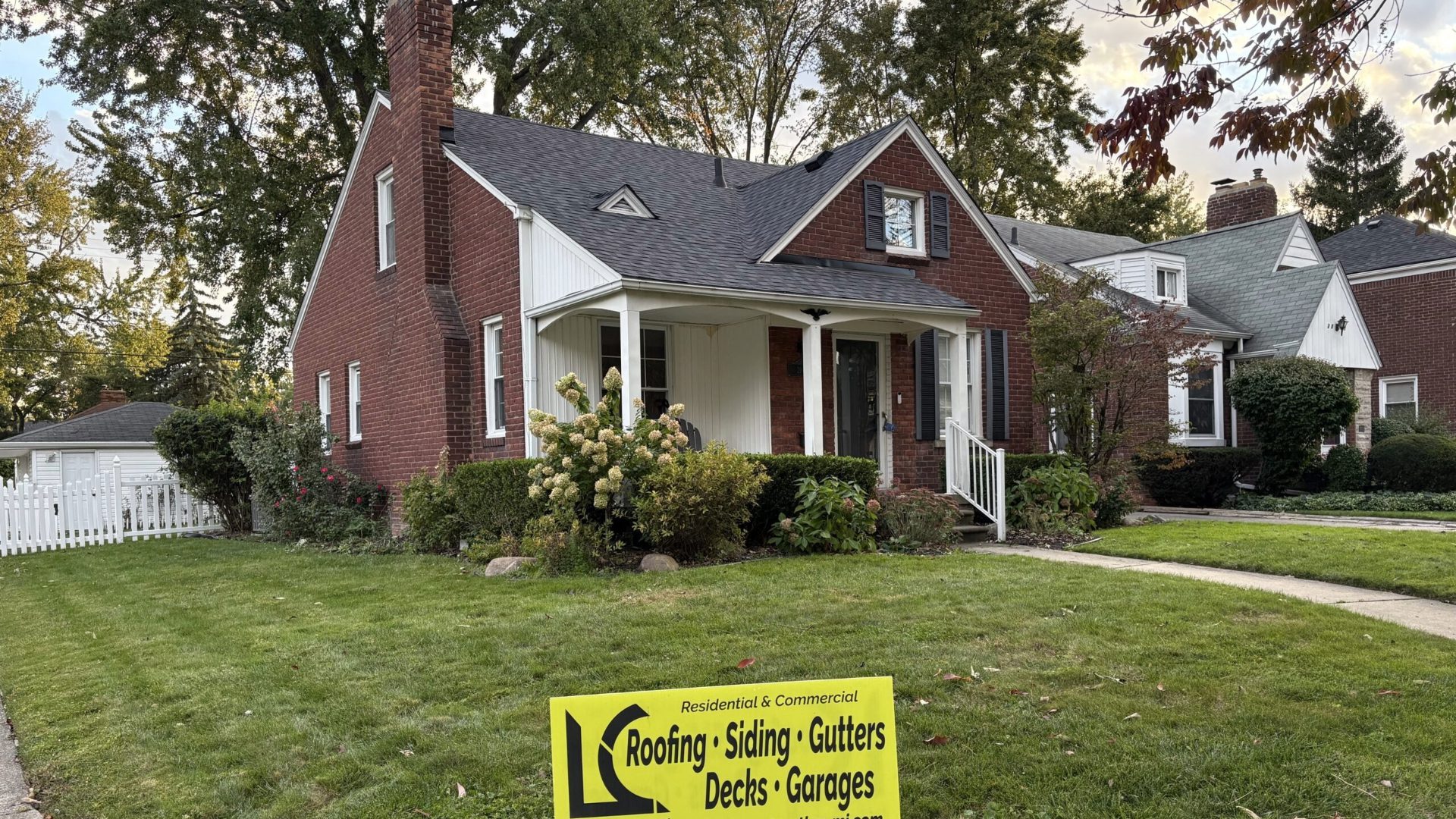
A new asphalt shingle roof returns roughly 65-75% of its cost at resale, depending on the scope and your region within the East North Central market that includes Michigan (JLC, 2025). That percentage might look lower than the exterior projects listed above, but context matters here.
Roofing isn’t optional the way a garage door or stone veneer might be. When your roof is failing, you’re not deciding whether to improve – you’re deciding how quickly you need to act before water damage creates exponentially larger problems. A roof in poor condition can actually reduce your home’s value far beyond the cost of replacement, because buyers either walk away entirely or discount their offer to account for the work needed.
Why roofing ROI is different in Michigan
Most asphalt roofs in Michigan last 15-20 years – shorter than the same materials might last in gentler climates. Our freeze-thaw cycles are brutal on shingles. Ice dams, heavy snow loads, summer storms, and dramatic temperature swings all accelerate wear.
That means Michigan homeowners often face roofing decisions more frequently than the national average suggests. When you do replace, quality installation and materials make a measurable difference in lifespan. Products like CertainTeed Landmark Pro shingles offer enhanced durability for our climate conditions, and proper installation techniques – including adequate ventilation, ice and water shield in vulnerable areas, and complete tear-off rather than layering over old shingles – ensure you’re getting the maximum lifespan from your investment.
Roof replacement costs in Southeast Michigan typically range from $8,000 to $15,000 for an average home, though complex rooflines, structural repairs, and premium materials can push costs higher. Your final number depends on the size of your roof, the pitch, the number of layers being removed, and whether there’s any decking damage that needs repair once the old shingles come off.
🍳 6. Minor Kitchen Remodel
Is a minor kitchen remodel worth the investment?
A minor kitchen remodel – focused on cosmetic and surface-level improvements rather than structural changes – returns approximately 96% of its cost at resale (West Shore Home, 2025). The average minor kitchen remodel costs between $15,000 and $35,000, depending on the scope, making this one of the best interior renovation values available.
The key distinction is “minor.” A full gut-and-rebuild kitchen renovation can easily exceed $75,000 and returns only around 38% of that investment. The smarter play, financially speaking, is updating what you have: refacing cabinets, replacing countertops, upgrading appliances, adding a tile backsplash, and refreshing hardware and fixtures. For a deeper look at what different scopes of kitchen work cost in our area, our 2026 kitchen and bathroom remodel cost guide breaks it all down.
Strategic kitchen updates for Michigan homes
Many Metro Detroit homes were built in the 1950s through 1970s, and their kitchens reflect the design priorities of that era – closed-off layouts, limited counter space, and dated finishes. A minor remodel can transform these spaces without the expense and disruption of moving walls or rerouting plumbing.
Focus your budget on the elements buyers notice most: countertops, cabinet appearance, and appliances. Quartz and granite countertops remain strong selling points. Cabinet refacing or painting can deliver dramatic visual change at a fraction of full replacement cost. And Energy Star-rated appliances signal to buyers that the home is updated and efficient.
If you’re planning to stay in your home for several years, the daily quality-of-life improvement from a kitchen update often matters more than the resale math. You use your kitchen every day – making it a space you enjoy has value that doesn’t show up in a cost-versus-value report.
🚿 7. Bathroom Remodel
What return can you expect from a bathroom remodel?
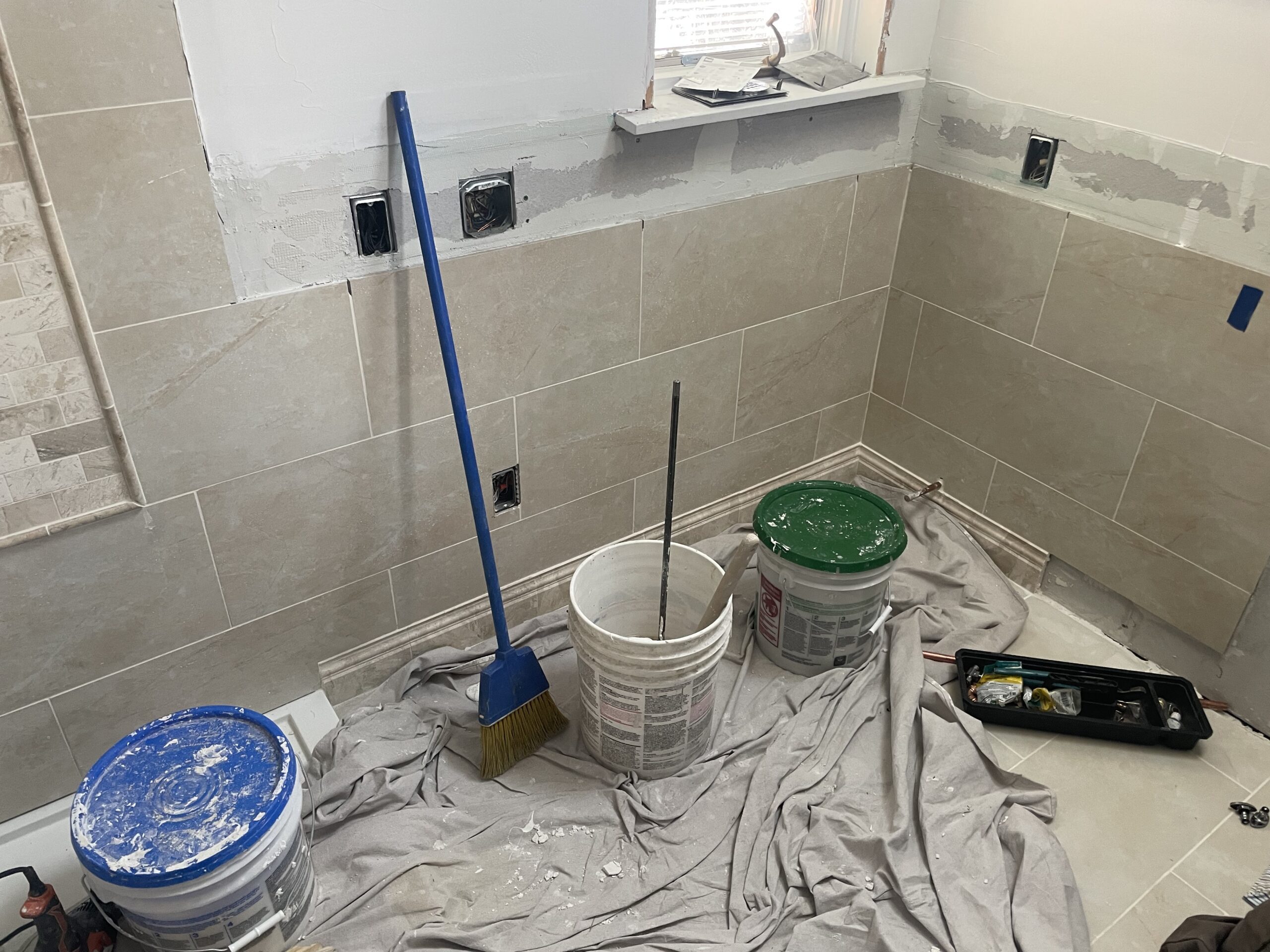
A midrange bathroom remodel returns approximately 74% of its cost nationally, with the average project running between $18,000 and $35,000 for a full bathroom renovation (House Digest, 2025). The ROI on bathroom work is strong because bathrooms are one of the first spaces buyers evaluate when considering a home purchase.
The sweet spot for return is a moderate update: new fixtures, updated tile, a modern vanity, and improved lighting. Luxury additions like heated floors, steam showers, and custom tilework are personally rewarding but rarely return their full cost at resale. If you’re working with limited square footage, smart design strategies can make even a small bathroom feel spacious and functional.
Bathroom considerations for Michigan homeowners
Older Michigan homes frequently have only one full bathroom – a feature that significantly limits resale appeal in today’s market. Adding a second bathroom or converting a half-bath to a full bath can have a bigger impact on your home’s value than upgrading an existing one.
If you’re updating an existing bathroom, moisture management deserves extra attention. Michigan’s humidity swings between seasons put bathroom materials through stress that accelerates wear. Proper ventilation, moisture-resistant drywall (greenboard or cement board behind tile), and quality waterproofing behind shower walls all extend the life of your renovation.
For homeowners thinking longer-term, incorporating universal design features during a bathroom remodel – things like curbless shower entries, blocking for future grab bars, and wider doorways – adds very little to the project cost while broadening the home’s appeal to a wider range of future buyers.
🏠 8. Basement Finishing
Is finishing a basement a good investment in Michigan?
Finishing a basement returns approximately 71% of its cost at resale according to the 2025 Cost vs. Value Report – a figure that stays remarkably consistent across all U.S. regions, with only 14 percentage points of variation from the best to worst markets (JLC, 2025). The typical project costs between $50,000 and $75,000 for a full finished basement including a bathroom and wet bar area.
For Michigan homeowners specifically, basement finishing deserves serious consideration. Nearly every home in our region has a basement, and many of those basements are underutilized storage areas with huge potential. Finishing that space effectively adds an entire floor of usable living area to your home at a cost per square foot that’s dramatically lower than building an addition.
If you’re locked into a low mortgage rate and need more space, finishing your basement can give your family room to spread out without the financial hit of selling and buying at today’s higher rates.
Michigan-specific basement challenges
Our climate creates some unique considerations for basement projects. Moisture control is the biggest one. Michigan basements deal with hydrostatic pressure from our clay-heavy soils, seasonal water table fluctuations, and condensation from temperature differentials between the ground and the living space above. We covered the full scope of Michigan basement challenges and solutions in a separate guide if you want the deep dive.
A successful basement finish in Michigan starts with addressing any existing moisture issues before the first wall goes up. That might mean exterior drainage improvements, interior waterproofing, or a sump pump upgrade. Skipping this step to save money upfront almost always leads to problems that cost more to fix after the space is finished.
Michigan building code requires finished basements to meet specific standards: minimum 7-foot ceiling height, adequate egress (usually an egress window if you’re adding a bedroom), permanent heating, and proper electrical. These aren’t just bureaucratic requirements – they ensure the space is safe, comfortable, and counts as legitimate living area that adds to your home’s square footage in an appraisal.
🌳 9. Deck Addition
Does adding a deck increase home value?
A wood deck addition returns approximately 45-55% of its cost at resale, with composite deck additions returning similar percentages at a higher price point (HomeLight, 2026). Average deck construction costs range from $3,600 to $7,200 for a basic wood deck up to $15,000-$30,000+ for larger composite builds.
The ROI percentage on decks is lower than some other projects on this list, but the real-world impact is substantial. Outdoor living space has become one of the most desirable features for homebuyers. The National Association of Home Builders reports that porches are included in 68% and patios in 64% of new home builds – evidence that buyers expect and value outdoor living areas.
Making decks work in Michigan’s climate
Michigan’s short but intensely enjoyed outdoor season makes deck space especially valued. From May through October, a well-designed deck becomes an extension of your living space – the spot where summer evenings happen.
Material choice matters a lot for longevity in our climate. Composite decking from manufacturers like Trex and TimberTech handles freeze-thaw cycles without splitting, warping, or requiring annual sealing. The upfront cost is higher than pressure-treated lumber, but the reduced maintenance and longer lifespan often make it the better financial decision over 15-20 years.
Cedar is the premium natural wood choice and offers natural resistance to insects and weather. Pressure-treated lumber remains the most affordable option, though it requires regular sealing and staining to hold up against Michigan winters.
Regardless of material, proper structural engineering matters. Snow loads in Southeast Michigan can put significant weight on deck framing, and the footings need to extend below the frost line (42 inches in our area) to prevent heaving. These aren’t places to cut corners.

Eco-friendly cellulose insulation
⚡ 10. Energy Efficiency Upgrades
Which energy efficiency improvements have the best ROI?
Energy efficiency improvements offer a unique value proposition because they deliver returns in two ways: increased resale value and reduced monthly utility costs. Attic insulation, for example, can return over 100% of its cost at resale while reducing heating costs by up to 25% every year you live in the home (Zavza Seal, 2025).
Backup power generators are a newer entry in the Cost vs. Value Report, debuting in 2025 with a 95.3% national ROI – though this number varies significantly by region, with storm-prone and grid-vulnerable areas seeing higher returns (JLC, 2025).
Window replacement delivers a more moderate ROI – roughly 68-76% depending on material choice (vinyl versus wood) – but the daily comfort improvement and utility savings can make windows a worthwhile investment regardless of the resale math.
Energy upgrades that matter most for Michigan homes
If you’re going to spend money on energy efficiency in Michigan, insulation should be at the top of your list. Many homes in Metro Detroit were built with insulation standards that don’t come close to meeting current energy codes. Adding blown-in insulation to your attic, and ensuring your basement rim joist is properly insulated, can make a noticeable difference in comfort and heating costs during our long winters.
Window replacement makes the most sense when targeted strategically. You don’t necessarily need to replace every window in the house. Start with the worst performers – typically the oldest single-pane windows or any units with broken seals, visible condensation between panes, or obvious drafts. Energy Star-rated vinyl windows are the best value for most homeowners, offering strong insulation performance at a lower cost than wood.
Federal tax incentives also improve the math. The Energy Efficient Home Improvement Credit allows homeowners to claim 30% of costs up to $3,200 per year for qualifying upgrades including insulation, windows, doors, and heat pumps. These credits effectively reduce your out-of-pocket cost, improving the ROI calculation for energy projects.
📊 How to Decide Which Improvements Are Right for Your Home
Should you renovate for resale value or personal enjoyment?
ROI data is useful, but it shouldn’t be the only factor driving your decisions. The best home improvements are the ones that solve a real problem you’re experiencing right now while also adding value to your property.
If you’re planning to sell within the next year or two, focus on the high-ROI exterior projects at the top of this list. Garage doors, entry doors, siding, and curb appeal improvements give you the biggest bang for your buck when buyers are forming first impressions.
If you’re staying in your home for five or more years, interior projects like kitchen and bathroom updates, basement finishing, and energy efficiency upgrades deliver daily quality-of-life improvements that compound over time. The ROI percentages might be lower, but you get to enjoy those improvements every single day.
What about Michigan’s older housing stock?
One important consideration for Southeast Michigan homeowners: many of our homes are 50 to 80 years old, and they often need foundational work that doesn’t show up on standard ROI lists. Bringing outdated wiring up to code, replacing aging plumbing, or addressing structural issues might not have glamorous return-on-investment numbers, but neglecting them can undermine the value of everything else you do.
A good approach is to handle necessary repairs first, then invest in the value-adding improvements. If you need a new roof because the current one is leaking, that’s not an ROI decision – that’s maintenance. If your electrical panel is at capacity and you’re blowing breakers, upgrading it protects your home even if the ROI isn’t as flashy as a new garage door.
Why professional installation matters for ROI
Every project on this list assumes professional installation performed to current building codes. DIY renovations can save money upfront, but improper installation often reduces the value added and can actually create problems that cost more to fix later. Buyers and appraisers notice the difference between professional-quality work and amateur results, and unpermitted work can create legal and insurance complications during a sale.
Working with a licensed contractor who understands local building codes, pulls proper permits, and stands behind their work with warranties ensures your improvement investment is protected. In Michigan, any residential construction or remodeling project valued at $600 or more requires a licensed Residential Builder.
🔑 Making Smart Home Investment Decisions
The data is clear: exterior improvements consistently deliver the highest ROI at resale, while interior renovations tend to provide more personal enjoyment during the years you live in your home. The smartest approach combines both – maintain your home’s exterior to protect and grow its value while investing strategically in the interior spaces where you spend your time.
For Michigan homeowners, every improvement decision comes with an extra layer of consideration. Our climate is harder on homes than most of the country, which means the quality of materials and installation matters more here than in milder regions. A cheap roof or poorly installed siding might hold up fine in Tennessee. In Michigan, cutting corners catches up with you faster.
Whether you’re getting your home ready to sell, planning to stay put for another decade, or somewhere in between, the projects on this list represent the most reliable ways to grow your home’s value while improving how you live in it.
At Leach Construction, we’ve been helping Southeast Michigan homeowners make these exact decisions since 1965. From roofing and siding to decks, kitchens, bathrooms, and basements, our team provides honest guidance on which improvements make the most sense for your specific situation and budget. We provide detailed written estimates, pull all necessary permits, and stand behind our work with clear warranties.
Ready to talk about which improvements make sense for your home? Contact Leach Construction for a free consultation. We’ll walk through your options and help you make investment decisions that pay off – whether you’re selling next year or staying for the next 20.