
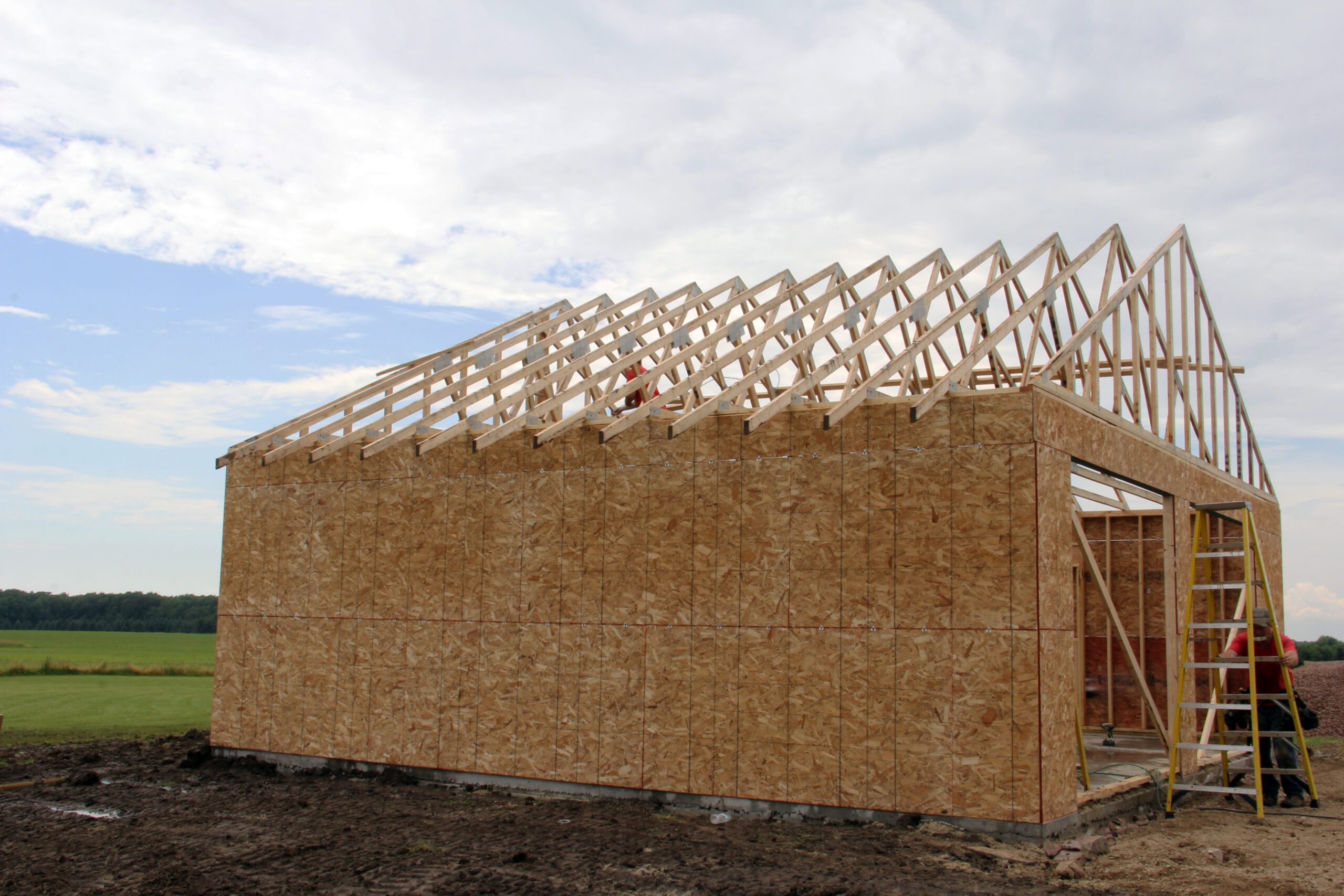
Is It Worth Building a Garage? A Michigan Homeowner’s Complete Guide
Most Metro Detroit winters make the answer pretty obvious. Scraping ice off your windshield at 6 a.m., watching your vehicles absorb another season of road salt, or staring at a detached garage that’s half-collapsed and no longer worth saving – these are the moments when “should I build a garage?” stops being a hypothetical and becomes something you actually need to figure out.
Building a garage in Michigan involves real decisions: attached or detached, what size, what it actually costs in this market, what permits you need, and what Michigan’s climate demands from the construction itself. This guide walks through all of it so you can make an informed call before you start getting estimates.
🏠 Is Building a Garage Worth the Investment?
Does adding a garage increase home value?
Yes – a properly built, permitted garage adds between $12,000 and $36,000 to a home’s resale value, with most homeowners seeing a return on investment in the 60-80% range. Custom-built garages that match the home’s architecture and pass inspection consistently outperform prefab kits at resale. An unpermitted structure, on the other hand, can actually complicate a sale.
ROI varies based on size, finish level, and local market conditions. In Metro Detroit, where attached garages are standard on newer construction and expected by most buyers, adding one to a home that lacks it can close a significant gap in perceived value. A well-built detached garage on a property that previously had none can make a real difference in what buyers are willing to offer.
That said, ROI at resale isn’t the only way to think about value. If you’re parking in the driveway through Michigan winters, keeping seasonal equipment in a rented storage unit, or working out of a cramped basement – a garage pays dividends long before you ever sell.
What are the benefits of having a garage in Michigan?
Michigan’s climate makes a garage more valuable than it would be in most other parts of the country. The practical benefits go well beyond keeping your car dry:
- ✓ Vehicle protection from road salt – Southeast Michigan roads get heavily salted from November through March. A garaged vehicle accumulates significantly less undercarriage corrosion over time.
- ✓ Freeze-thaw protection – Vehicles parked outside absorb 100+ freeze-thaw cycles per year, stressing seals, fluids, and rubber components. Even an unheated enclosed garage reduces that exposure significantly.
- ✓ No ice scraping or snow clearing – This one speaks for itself on a January morning.
- ✓ Storage for seasonal equipment – Snowblowers, lawn mowers, bikes, kayaks, holiday decorations. Most Metro Detroit homes don’t have enough storage, and a garage solves that problem better than nearly any other renovation.
- ✓ Workshop or hobby space – An insulated, wired garage becomes genuinely usable workspace for woodworking, car projects, crafts, or a home gym – especially once you add a heater.
- ✓ Covered access between house and vehicles – An attached garage means groceries, car seats, and work gear move between car and house without a trip through the weather.
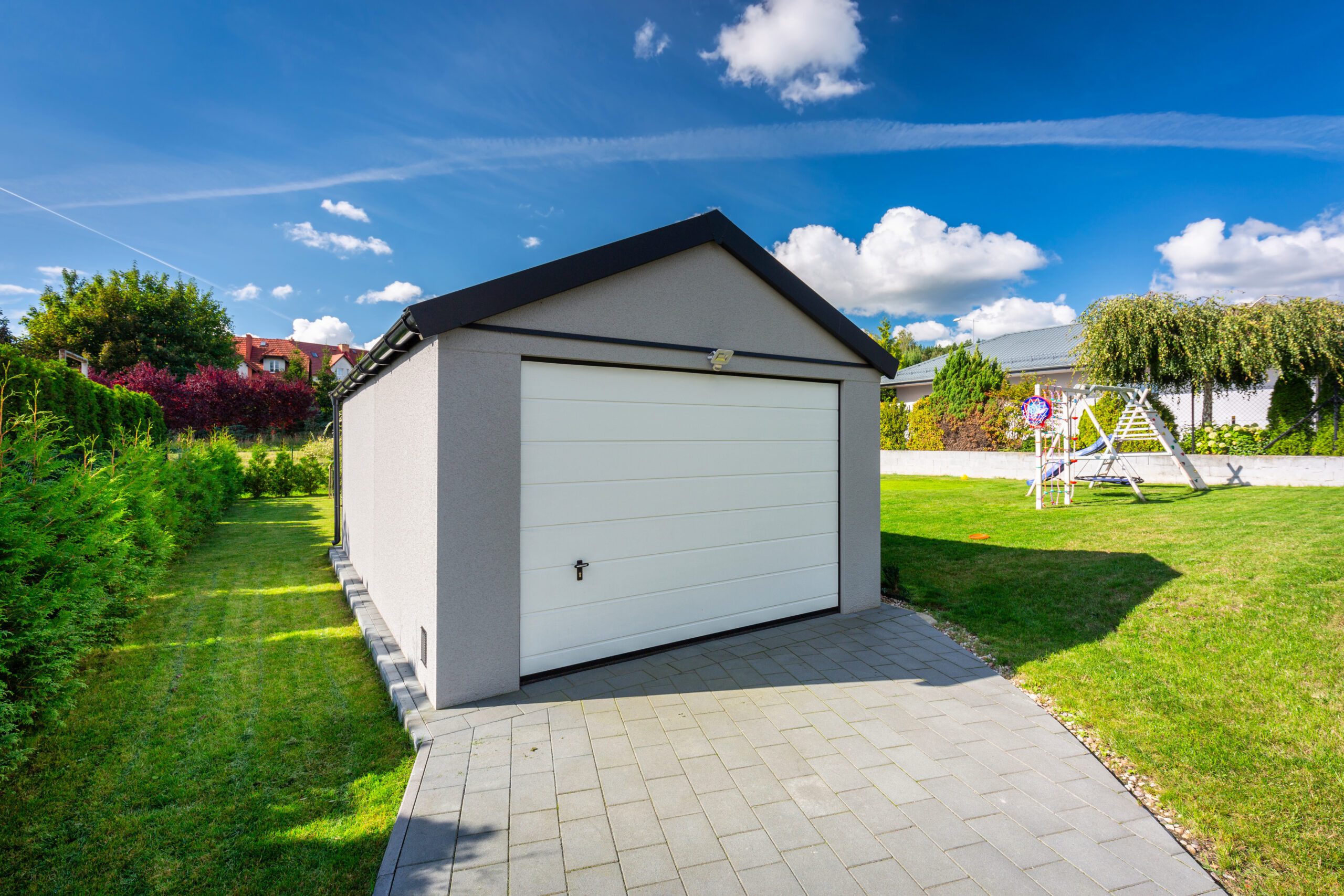
A detached garage in a green garden at summer
🔀 Attached vs. Detached Garage: Which Is Right for You?
What is the difference between an attached and detached garage?
An attached garage shares at least one wall with the home and connects directly to the living space, typically through a door into a mudroom, laundry room, or hallway. A detached garage is a freestanding structure on the property, completely separate from the house. Both serve the same core function, but they differ in cost, construction complexity, code requirements, and how they fit into your daily routine.
When does an attached garage make more sense?
An attached garage is usually the right call when direct indoor access matters, when the property layout allows it, and when budget is a priority. Because it shares a foundation and at least one wall with the house, attached garages generally cost less to build than detached structures of the same size – less material, shorter utility runs, simpler site prep.
There are code requirements that come with attached garages that don’t apply to detached ones. Michigan building code requires fire-rated separation between the garage and living space: at minimum, half-inch drywall on any wall or ceiling shared with the house, a fire-rated self-closing door between the garage and the interior, and no HVAC supply ducts running through the garage. These aren’t optional – they’re what separates a permitted, legal build from a liability. A licensed builder handles all of this as standard procedure.
When does a detached garage make more sense?
A detached garage is often the only practical option in older Metro Detroit neighborhoods where the home’s footprint doesn’t allow for an attached addition, or where the lot layout puts the ideal garage location away from the house. Many St. Clair Shores, Eastpointe, and Detroit-area properties were built with alley access in mind – the natural placement for a garage is at the back of the lot, and that means detached.
Beyond layout, detached garages have some real advantages even when an attached option exists. They’re better suited for workshop use because noise, fumes, and dust stay separated from the living space. They don’t require the fire-separation code upgrades attached garages do. And they offer more design flexibility since they don’t need to match the home’s structural footprint.
The tradeoff is cost. A detached garage requires a complete independent foundation, four full walls, and a separate electrical run from the main panel – typically trenched underground. That generally means a higher price tag than a comparably sized attached garage.
💰 How Much Does It Cost to Build a Garage in Michigan?
What is the average cost to build a garage in Metro Detroit?
For a standard two-car detached garage in the Metro Detroit market, budget somewhere in the $30,000 to $55,000 range for a quality custom build. Smaller single-car detached garages can come in lower. Attached garages at comparable sizes tend to run 15-25% less due to the shared wall and foundation.
| Garage Type | Typical Size | Estimated Cost Range (Metro Detroit) |
|---|---|---|
| Single-car detached | 12×20 or 14×20 | $18,000 – $30,000 |
| Two-car detached | 24×24 | $30,000 – $55,000 |
| Single-car attached | 12×20 or 14×22 | $15,000 – $25,000 |
| Two-car attached | 20×20 or 24×24 | $25,000 – $45,000 |
National averages ($25,000-$30,000) don’t fully reflect what construction costs in this market. Labor rates in Southeast Michigan, combined with the foundation requirements our frost depth demands, push costs above what most national estimator sites quote. Material costs have also shifted significantly since 2020 – lumber, concrete, and framing materials are all higher than pre-pandemic pricing, and that reality hasn’t fully filtered into what homeowners expect to pay.
What factors affect the cost of building a garage?
- Size – Square footage is the single biggest driver. A 24×24 two-car costs significantly more than a 12×20 single-car, even though both are “just a garage.”
- Attached vs. detached – Detached requires more material: four walls, an independent foundation, and a separate electrical run.
- Foundation type – Michigan’s frost depth requirements affect how deep footings need to go, which affects both labor and material cost.
- Electrical scope – Basic lighting and a couple of outlets vs. a fully wired workshop with 240V service are very different line items.
- Insulation – Worth including in the initial build. Retrofitting insulation after the walls are finished costs significantly more.
- Exterior materials – Matching your home’s existing siding and roofing costs more than using a different material, but it looks significantly better and holds value better at resale.
- Site prep – A flat, clear building site is straightforward. Sloped lots, existing concrete to remove, drainage issues, or trees to clear can add $1,000-$8,000 before framing begins.
What does a garage foundation cost in Michigan?
Michigan’s frost depth – typically 42 inches in the southeastern part of the state – is one of the most important factors in garage construction that national cost guides tend to gloss over. Footings need to extend below the frost line to prevent heaving from freeze-thaw cycles. That means more excavation and more concrete than a comparable build in a warmer climate.
A concrete slab with proper frost-depth footings typically runs $4 to $8 per square foot, or roughly $2,300 to $4,600 for a standard 24×24 slab before labor. A frost-protected foundation adds $2,000 to $5,000 to that baseline. It’s not optional – skipping proper frost protection leads to heaving, cracking, and door alignment problems within a few seasons.
Does adding electricity to a garage cost extra?
Yes, and the cost depends on how far the garage sits from your main electrical panel. For a detached garage, running power requires trenching conduit underground from the house – typically 40 to 100 feet of trench at $5 to $15 per foot, plus conduit, wire, and the panel work on both ends. Most homeowners budget $1,500 to $5,000 for electrical on a detached garage, with complex setups landing at the higher end.
The important thing: do the electrical work during the initial build, not as a later add-on. Retrofitting electrical after the walls are finished means opening up finished surfaces and running new conduit, which costs considerably more than including it in the original scope. If you think you might ever want EV charging, workshop circuits, or even just solid lighting throughout, plan for it now.
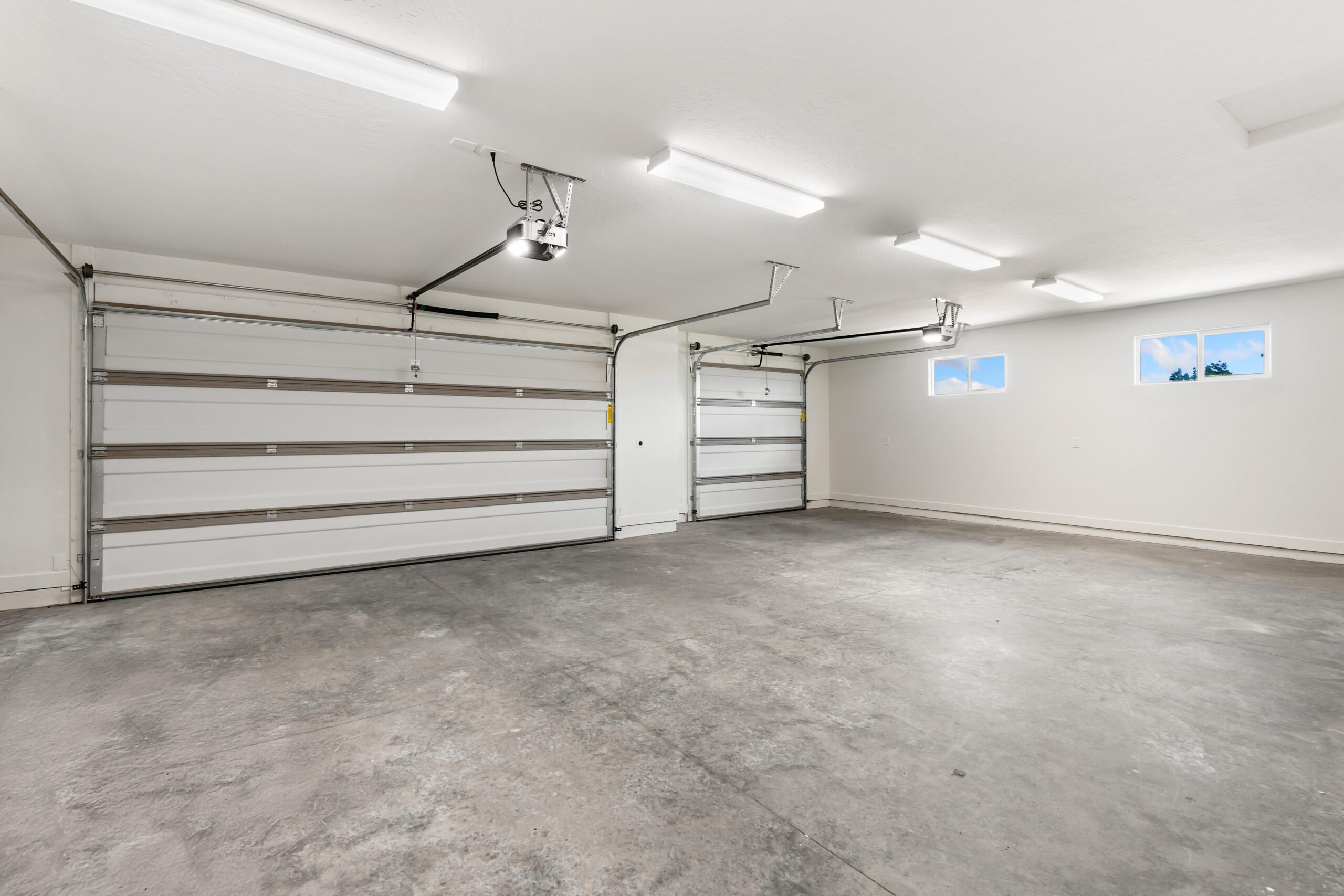
The garage is completely empty, featuring two large garage doors and a solid concrete floor that is smooth and durable
📋 Do You Need a Permit to Build a Garage in Michigan?
Is a building permit required for a garage in Michigan?
Yes – in virtually every Michigan municipality, a permit is required for new garage construction. Michigan state law requires building permits for new construction, additions, and major renovations. A licensed residential builder can pull the permit on your behalf (and should – it puts legal responsibility where it belongs), or homeowners can pull their own permit for work they personally perform. Hiring a contractor who skips permits leaves you with an unpermitted structure that creates real problems at resale, with your insurance company, and potentially with your municipality.
What does the Michigan garage permit process involve?
Requirements vary by municipality, but Michigan law generally requires a sealed mortgage survey, construction plans, and a complete site plan. Your local building department reviews these before issuing the permit, and inspections happen at key stages – foundation, framing, and final completion.
One requirement that surprises a lot of homeowners: before any excavation begins in Michigan, you’re legally required to notify MISS DIG 811 at least three full working days in advance. This is mandated by Act 53 of Michigan’s Public Act of 1974. Underground utilities get marked so the excavation crew doesn’t hit gas lines, water mains, or buried electrical. Starting excavation before the legal start date provided by MISS DIG is actually a crime in Michigan. A licensed builder handles this notification as standard procedure on every job.
What are typical setback requirements for a garage in Michigan?
Setback requirements – the minimum distances a structure must sit from property lines – vary by municipality and zoning district. Generally, most local codes require garages to sit at least 2 to 5 feet from rear and side property lines. Some municipalities have different rules for attached vs. detached structures, and properties near easements or in flood zones have additional restrictions. Check with your local building department, or work with a licensed builder who already knows the local codes. Getting this wrong means tearing out finished work.
❄️ Michigan-Specific Considerations for Garage Construction
How does Michigan’s climate affect garage construction?
Building a garage in Michigan isn’t the same as building one in Georgia. A few factors specific to our climate that affect construction decisions:
Snow load. Michigan garage roofs need to be framed to handle significant snow accumulation. A 24×24 roof can hold thousands of pounds of wet, heavy snow. Proper rafter sizing and spacing are part of why the construction plans submitted with your permit get reviewed before work begins.
Frost depth. Footings need to extend at least 42 inches below grade in Southeast Michigan. A slab-on-grade without proper frost protection will heave, crack, and cause door alignment problems within a few seasons.
Drainage planning. Spring thaw in Metro Detroit can be aggressive. The site should be graded to direct water away from the foundation, and the garage floor should slope slightly toward a floor drain or the door opening to prevent pooling.
Exterior materials. Everything on the outside needs to perform through freeze-thaw cycles year after year. That’s worth keeping in mind when choosing siding – quality fiber cement and vinyl siding products hold up in our climate far better than cheaper alternatives.
What size garage do most Michigan homeowners need?
The standard two-car garage (24×24, or 576 square feet) is the right size for most families and the most common build in Metro Detroit. It fits two average vehicles with enough room to open doors without contorting yourself, and leaves wall space for storage and a basic workbench.
A few things worth thinking through before you settle on size: if you drive full-size trucks or SUVs – common in this market – a standard 24×24 gets tight quickly. Adding a few feet of depth (24×28 or 24×30) makes a noticeable difference in day-to-day usability. And if a dedicated workshop area is part of the plan, building that footprint into the initial structure is far cheaper than adding onto a finished garage later.
Should I insulate my garage in Michigan?
Yes, particularly in our climate. An uninsulated garage in Michigan swings from well below zero in January to over 90 degrees in August – conditions that are hard on stored vehicles, tools, and anything else you keep in there. Proper wall and ceiling insulation dramatically extends the usable season, protects what’s stored inside, and makes heating the space practical when you need it.
Insulation is also one of those things that costs much more to add after the fact than to include from the start. Once interior walls are finished, accessing the stud bays requires tearing out drywall. Include it in the original scope.
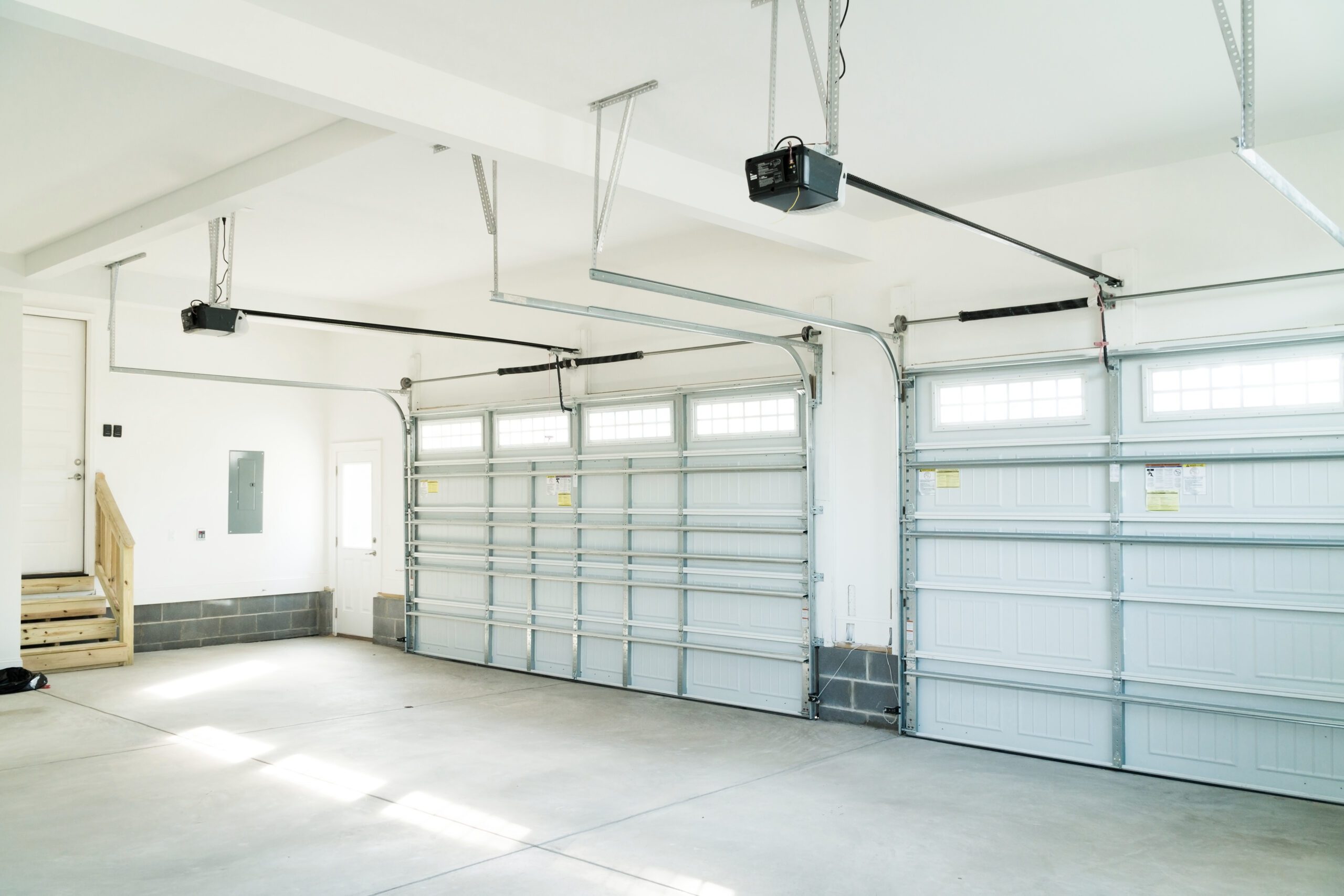
🔨 What Does the Garage Construction Process Look Like?
Understanding the build sequence helps set realistic expectations for timeline and what happens on your property.
→ Site assessment and permits – The builder evaluates grading, drainage, utility locations, and setback compliance. Permit applications and the MISS DIG notification go in at this stage. Permit approval timelines vary by municipality.
→ Site preparation – Clearing the building area, grading for drainage, and excavation for footings.
→ Foundation – Footings poured first, extending below the frost line. The concrete slab follows once footings cure. Concrete needs adequate cure time before framing begins – this isn’t a stage to rush.
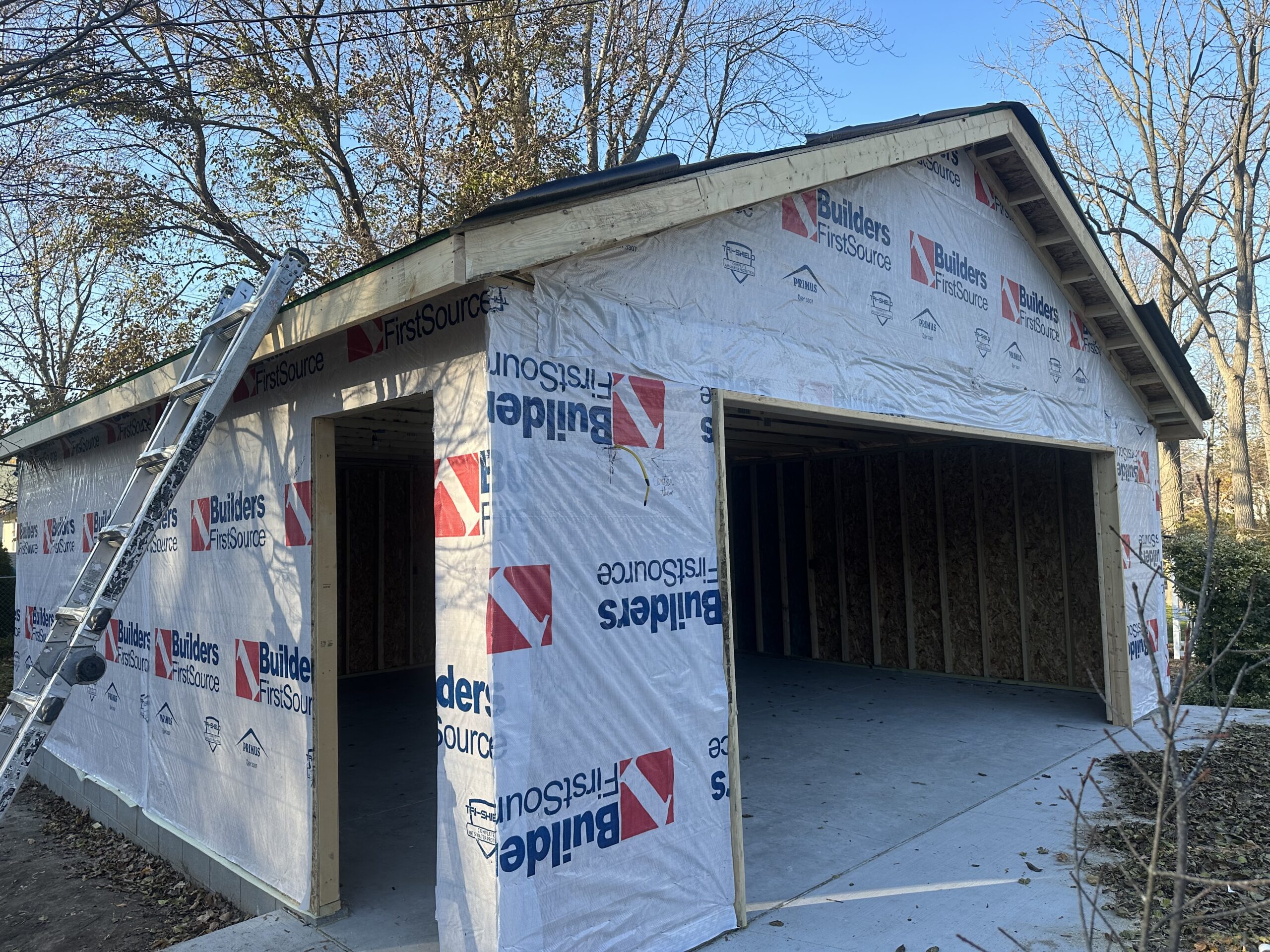
→ Framing – Wall framing, then roof trusses or rafters. For a standard detached garage, this is often the fastest-moving visible phase.
→ Roofing and exterior – Roofing goes on first to protect the structure, followed by sheathing and siding. Matching the exterior finish to your home’s existing siding makes the garage look like it was always part of the property.
→ Electrical and mechanicals – Licensed electrical work for lighting, outlets, the garage door opener circuit, and any additional circuits. For detached garages, this includes the underground conduit run from the main panel.
→ Doors, windows, and finishing – Garage door installation, windows if planned, interior finishing if applicable, and final inspection.
A standard detached two-car garage typically takes two to four weeks once permits are in hand and weather cooperates. Attached builds and projects with finished interiors or workshop buildout run longer due to added complexity.
Leach Construction handles every stage of this process – permit applications, MISS DIG notification, foundation through final inspection – with owners Dennis Leach and Michael Perri personally involved from the initial walkthrough through completion. Before you start collecting bids on any major project, the Navigate the Maze contractor guide is worth reading to know what questions to ask and what red flags to watch for.
🏗️ Choosing the Right Contractor for Your Garage Build
What should I look for in a garage contractor in Michigan?
Garage construction requires a licensed residential builder in Michigan – not a general handyman, not an unlicensed crew advertising on social media. The builder’s license is what allows them to pull permits, take legal responsibility for the work, and ensure the build passes inspection. A contractor who skips permits might save you something upfront and cost you significantly more when you go to sell, refinance, or file an insurance claim.
Beyond licensing, look for a written fixed-price quote, proper general liability and workers’ compensation insurance, and a verifiable track record. Michigan’s construction market has no shortage of contractors willing to take a deposit and go quiet – checking their license through the Michigan Department of Licensing and Regulatory Affairs (LARA) takes two minutes and eliminates a lot of that risk.
What questions should I ask before hiring a garage contractor?
- ✓ Are you a licensed Michigan Residential Builder? What’s your license number?
- ✓ Will you pull the building permit in your name, and is that included in your quote?
- ✓ Who handles the MISS DIG notification before excavation begins?
- ✓ Is your quoted price fixed, or are there conditions under which it changes?
- ✓ Do you carry general liability and workers’ compensation insurance? Can I see the certificates?
- ✓ Who will actually be on-site doing the work – your own crew or subcontractors?
The answers to these questions should come easily and confidently from any contractor worth hiring. Hesitation on any of them tells you something.
Frequently Asked Questions About Building a Garage in Michigan
How long does it take to build a garage in Michigan?
A standard detached two-car garage typically takes two to four weeks from groundbreaking to final inspection, weather permitting. That timeline assumes permits are already in hand – add one to four weeks for permit approval depending on your municipality. Larger garages, attached builds, or projects with finished interiors and workshop buildout generally run four to six weeks or longer.
Can I convert a garage into living space later?
Yes, but it requires permits and needs to meet Michigan’s building code for habitable space – minimum ceiling heights, proper egress, permanent heat, and adequate electrical. If there’s any chance you’ll want the option, it’s worth planning for it during the initial build. Running conduit, planning for adequate ceiling height, and roughing in plumbing and HVAC while the walls are open costs far less than retrofitting later. Any conversion needs to be permitted – an unpermitted garage conversion creates the same title and financing complications as any other unpermitted structure.
Does adding a garage require updating my homeowners insurance?
Yes – notify your insurance company when you add any permanent structure to your property. Most homeowners policies cover detached garages under an “other structures” provision, but coverage limits vary and may not fully cover a new build without a policy update. Call your agent before or shortly after the project begins.
What’s the difference between a carport and a garage in terms of value?
A significant one. An enclosed, permitted garage adds to your home’s appraised value and is counted as a structure on your property. A carport – essentially a roof without full walls – provides some weather protection but typically adds minimal appraised value and doesn’t solve the security or climate-protection problems a garage does. In Metro Detroit’s climate, a carport also provides limited protection against drifting snow and the wind-driven ice that comes with lake-effect weather off Lake St. Clair. For a long-term investment, a properly built garage is the better choice in nearly every case.
Let’s Talk About Your Garage Project
A garage is one of the more practical investments a Metro Detroit homeowner can make – it solves real daily problems, holds its value, and improves your quality of life in ways that are obvious the first February morning you walk out to a clear, dry vehicle.
Getting the build right means working with people who understand Michigan’s frost requirements, local permit processes, and what construction in this market actually costs. Leach Construction builds garages across Metro Detroit – detached, attached, replacement builds, and workshop-ready structures – with the same family-owned team from estimate through final inspection. We’ve been doing this work since 1965, and we pull every permit in our name.
Call us at 586-822-1981 or submit a request on our website and we’ll be in touch within 24 hours. If you’re still in the research phase, our Home Improvements Worth the Money guide breaks down ROI across major projects for Michigan homeowners – a useful reference for anyone deciding where a garage fits in their overall plans.