
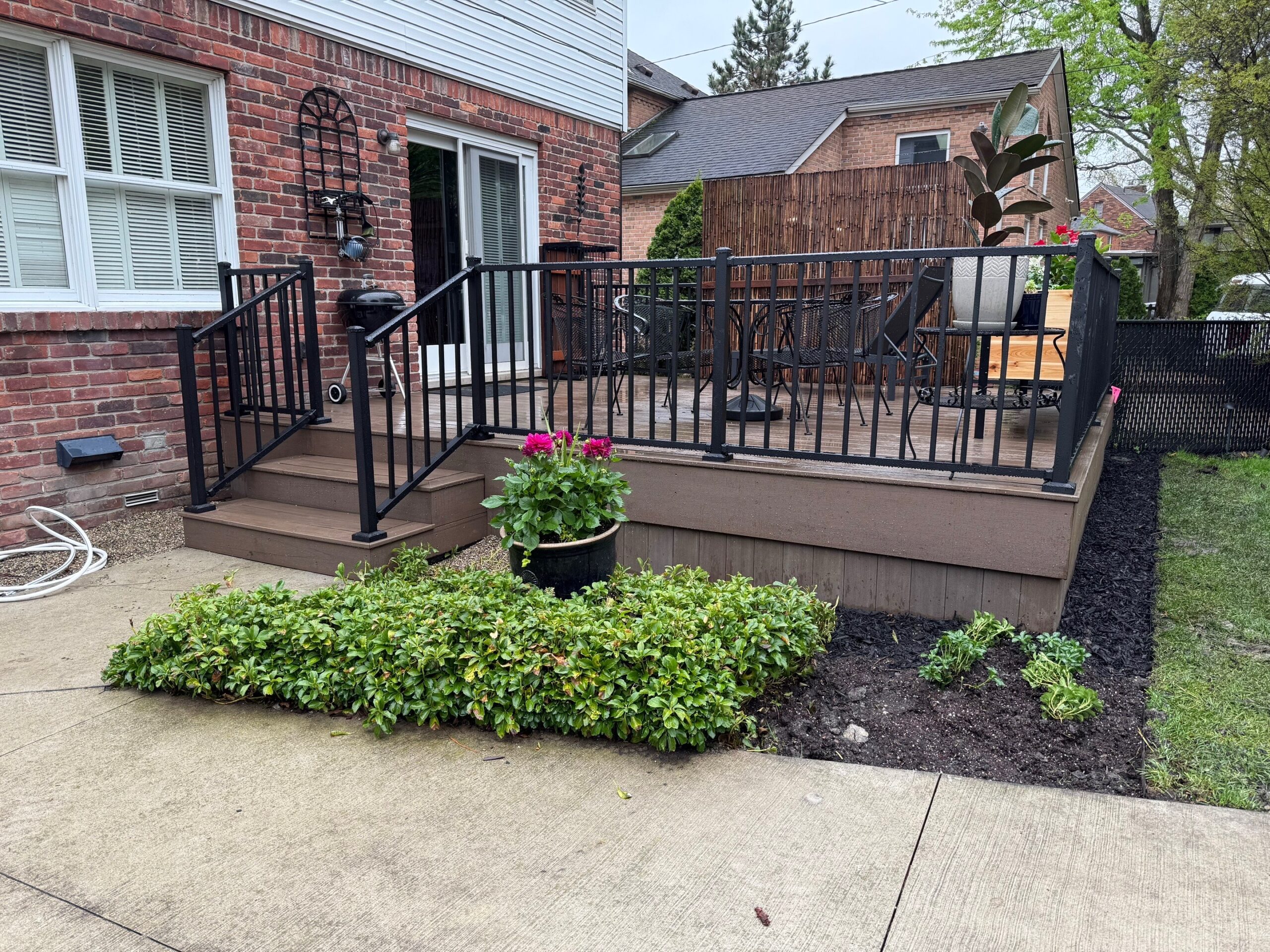
You’ve been thinking about a deck for a season or two. You’ve looked up prices online, gotten a few numbers that are all over the place, and you’re not totally sure what to trust. A 12×16 deck – what does that actually cost in St. Clair Shores? Do you need a permit? And if so, how long does that take?
A typical backyard deck in St. Clair Shores runs $5,000-$15,000 for pressure-treated lumber or $12,000-$30,000+ for composite, depending on size, elevation, and what you’re adding. Every new deck requires a permit from the city – but the process is more manageable than most homeowners expect when a contractor handles it as a matter of routine. This guide covers what decks actually cost in this market, exactly what St. Clair Shores requires for permits and inspections, what Michigan’s climate demands from the build itself, and what canal-side homeowners need to know before they start.
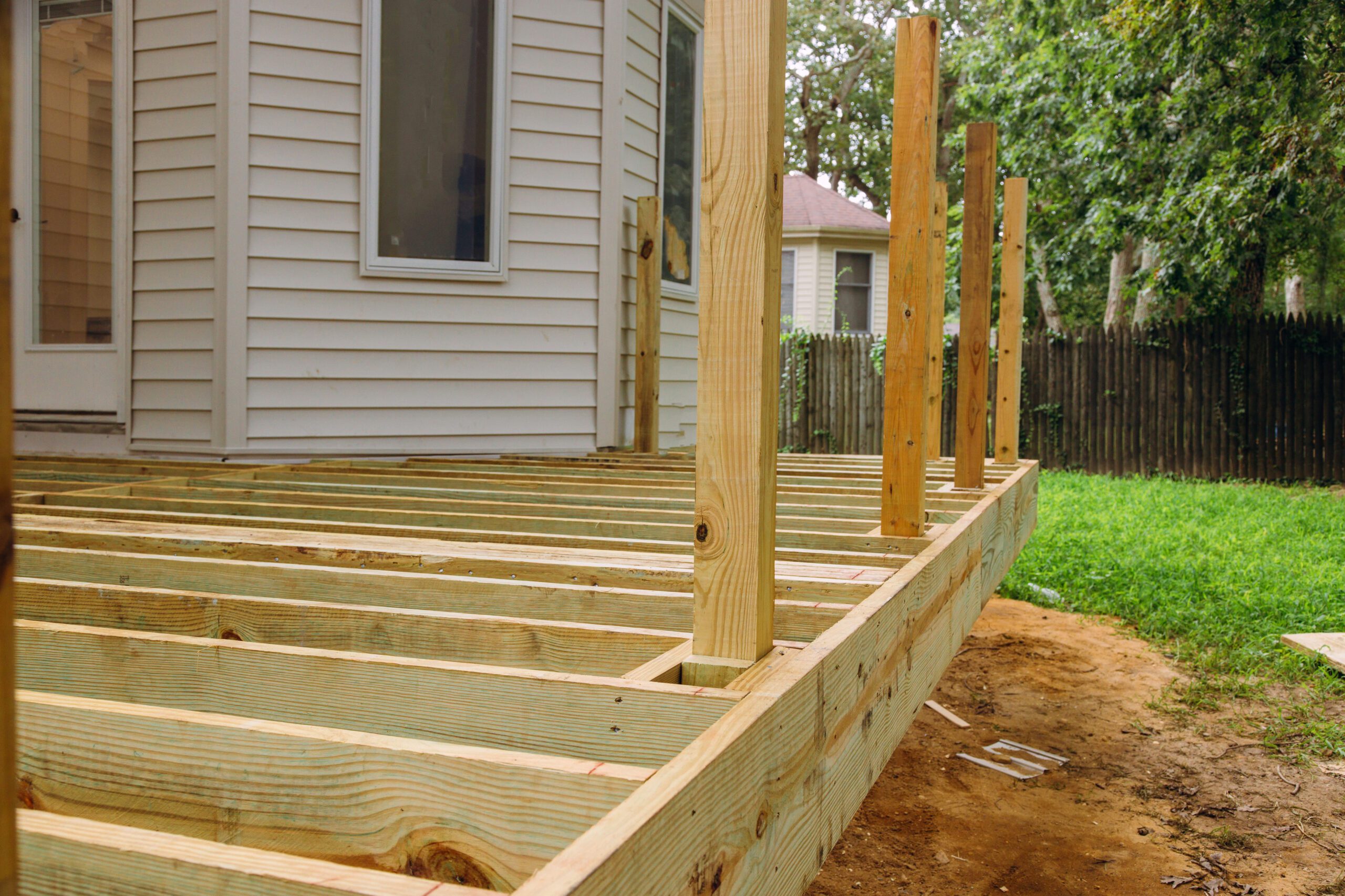
Photo by ungvar on Adobe Stock
How much does a deck cost in St. Clair Shores?
The honest answer is that material choice drives the cost range more than anything else. A basic 200 square foot pressure-treated deck and a 300 square foot composite build are completely different financial conversations. Size matters, but what you’re building it from matters more.
Labor rates in the St. Clair Shores area and the rest of Macomb County run roughly in line with the broader Southeast Michigan market. Where you’ll see variation between contractors is in the quality of materials specified, how they handle the structural framing, and whether the estimate includes permit fees or treats them as a separate line item. More on that when we get to comparing estimates.
Pressure-treated lumber
Pressure-treated pine is the most budget-accessible option. In Southeast Michigan, installed pressure-treated decks typically run $25-$50 per square foot, putting a basic 200 square foot deck somewhere in the $5,000-$10,000 range. Add stairs, railings, and any elevation off grade, and you’re moving toward the upper end of that range or beyond it.
The trade-off is maintenance. Pressure-treated lumber requires regular sealing or staining – typically every two to three years in Michigan’s climate – to stay ahead of moisture absorption, warping, and the effects of freeze-thaw cycling on the wood fibers. Skip that maintenance schedule and you’ll be replacing boards sooner than you planned.
Composite decking
Trex and TimberTech are the two brands that consistently perform well in Michigan conditions, and they’re what most experienced local contractors reach for when a homeowner wants low maintenance and long-term durability. Installed composite decking in Southeast Michigan runs roughly $40-$80 per square foot, putting a 300 square foot deck in the $12,000-$24,000 range. Larger builds or more complex configurations push higher.
The upside is real. Quality composite boards carry 25-year warranties, resist the splitting and warping that Michigan winters accelerate in natural wood, and need nothing more than an occasional wash to maintain their appearance. The higher upfront cost tends to pencil out over a 10-15 year horizon when you factor in what you’re not spending on maintenance.
Cedar
Cedar occupies the middle ground – a natural wood with better inherent resistance to rot and insects than pressure-treated pine, and better aging characteristics when maintained. Installed cedar decks in this market typically run $35-$65 per square foot. It requires maintenance, but it responds well to staining and holds up longer between applications than pine when properly cared for. For homeowners who specifically want the look and feel of natural wood, cedar is the more durable version of that choice.
What pushes the final number higher?
A few variables move the estimate significantly regardless of which material you choose.
- Elevation off grade. A deck that sits 30 inches or more above ground requires railings by code and typically needs a more substantial post-and-beam structure. That adds both materials and labor.
- Stairs. A straight staircase adds cost. Multiple landings or a wraparound configuration adds more.
- Deck size. This seems obvious, but the cost-per-square-foot doesn’t scale linearly – there are fixed costs in setup, permitting, and structural elements that don’t disappear on smaller projects.
- Site conditions. Sloped lots, existing concrete to remove, or drainage concerns near the foundation all add scope before framing begins.
- Add-ons. Built-in seating, pergolas, post lighting, and cable railing systems all add real dollars. Budget them separately from the base deck cost so you know what you’re comparing when estimates come in.

Photo by kitti on Adobe Stock
Does building a deck in St. Clair Shores require a permit?
Yes. St. Clair Shores requires a building permit for new deck construction. The city publishes its own Wood Deck Building Guide and enforces the Michigan Residential Code – any contractor telling you otherwise is either uninformed or steering you toward unpermitted work, which creates real problems if you sell the home or need to make a homeowners insurance claim.
Unpermitted structures have a way of showing up at the worst possible moment – during a home sale when a buyer’s inspector flags the deck, or when an insurance adjuster asks for the permit number after storm damage. Getting the permit right the first time costs a fraction of what it costs to deal with an unpermitted structure later.
What do you need to submit?
To pull a deck permit in St. Clair Shores, you’ll need to submit construction drawings – typically a plot plan showing where the deck sits on the lot relative to the property lines, plus structural drawings showing framing dimensions, post sizing, footing details, and railing specifications. The city’s Building Department reviews these against the 2015 Michigan Residential Code before issuing the permit.
Once the permit is issued, a copy of your approved plans and the city’s Wood Deck Building Guide must be physically on site for every inspection. The inspector will ask to see them.
What does the inspection sequence look like?
St. Clair Shores requires three inspections for a deck project.
The first – and most critical – is the post hole inspection, which happens before any concrete goes in. The inspector verifies that each hole reaches solid, undisturbed soil at least 42 inches below grade. That’s the frost depth requirement for Southeast Michigan, and it’s non-negotiable. Pour concrete before the inspector signs off and you may be looking at tearing it out.
The structural inspection happens once the framing is in place. The inspector checks that the framing matches your approved plans, that ledger board attachment to the house is properly flashed and fastened, and that the overall structure meets code requirements.
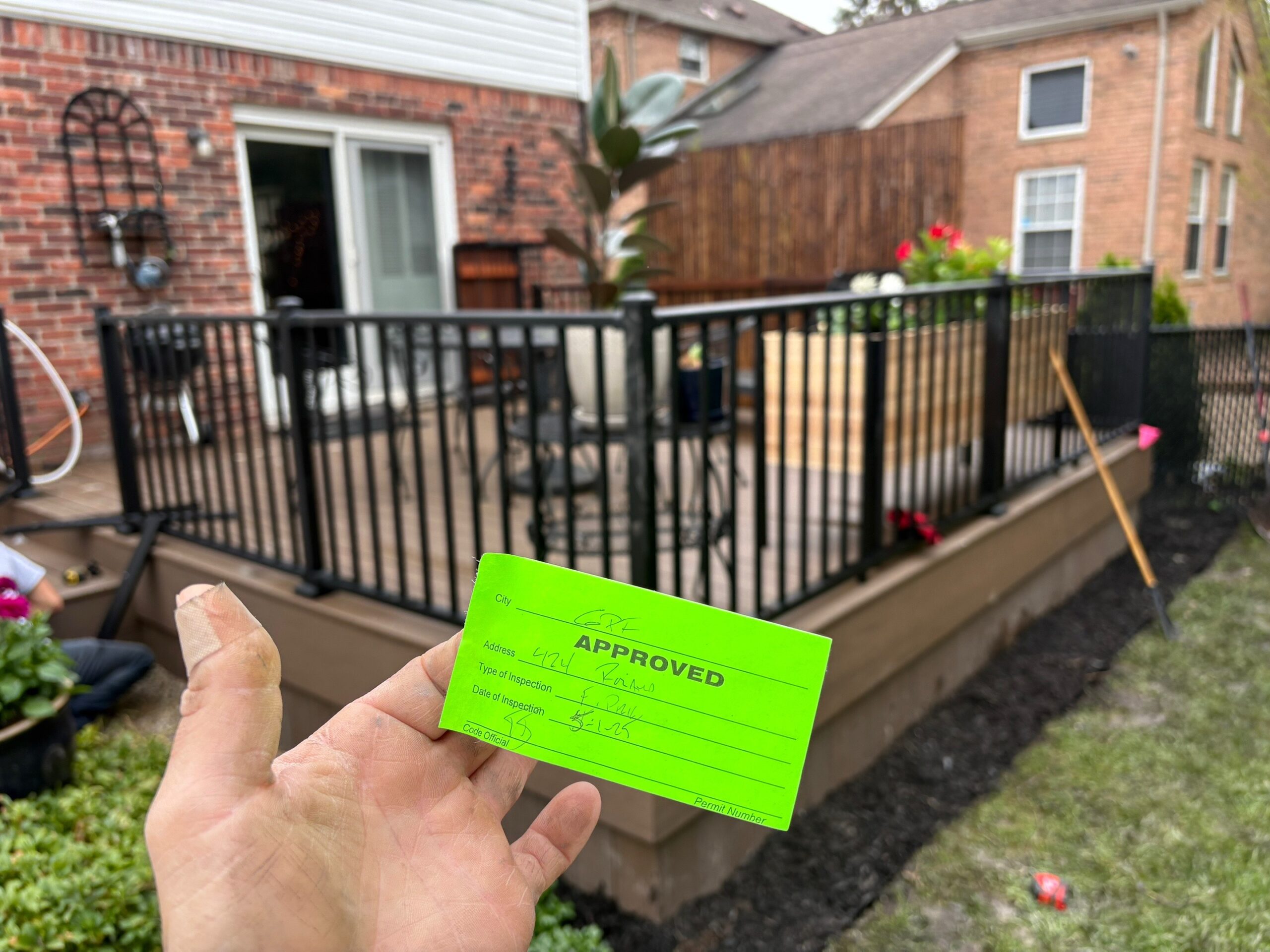
The final inspection closes out the permit and confirms the finished deck – decking, railings, stairs, and any required lighting – meets the approved plans. The city requires final inspections within 10 days of project completion.
How do you apply, and what does it cost?
You can apply online through the city’s BS&A Online portal or in person at City Hall (27600 Jefferson Ave). The Building Department’s general line is 586-447-3340 if you have questions before submitting.
Permit fees are based on the estimated project cost. Projects over $7,000 require a $500 refundable bond, returned after the final inspection passes. Your contractor should be able to give you a clear breakdown of expected permit fees as part of the estimate – if they can’t, that’s worth noting.
A licensed residential builder can pull the permit on your behalf, which puts the legal and professional responsibility where it belongs. Dennis Leach handles all permit applications and inspection coordination personally for every Leach Construction deck project – homeowners don’t have to navigate the process themselves.
How long does permit approval take in St. Clair Shores?
Typical permit review in St. Clair Shores takes one to two weeks for straightforward residential deck projects. During peak spring and summer season, when the building department sees high volume, plan for the longer end of that range. Submitting complete, accurate plans the first time is the most reliable way to avoid review delays or requests for additional information.
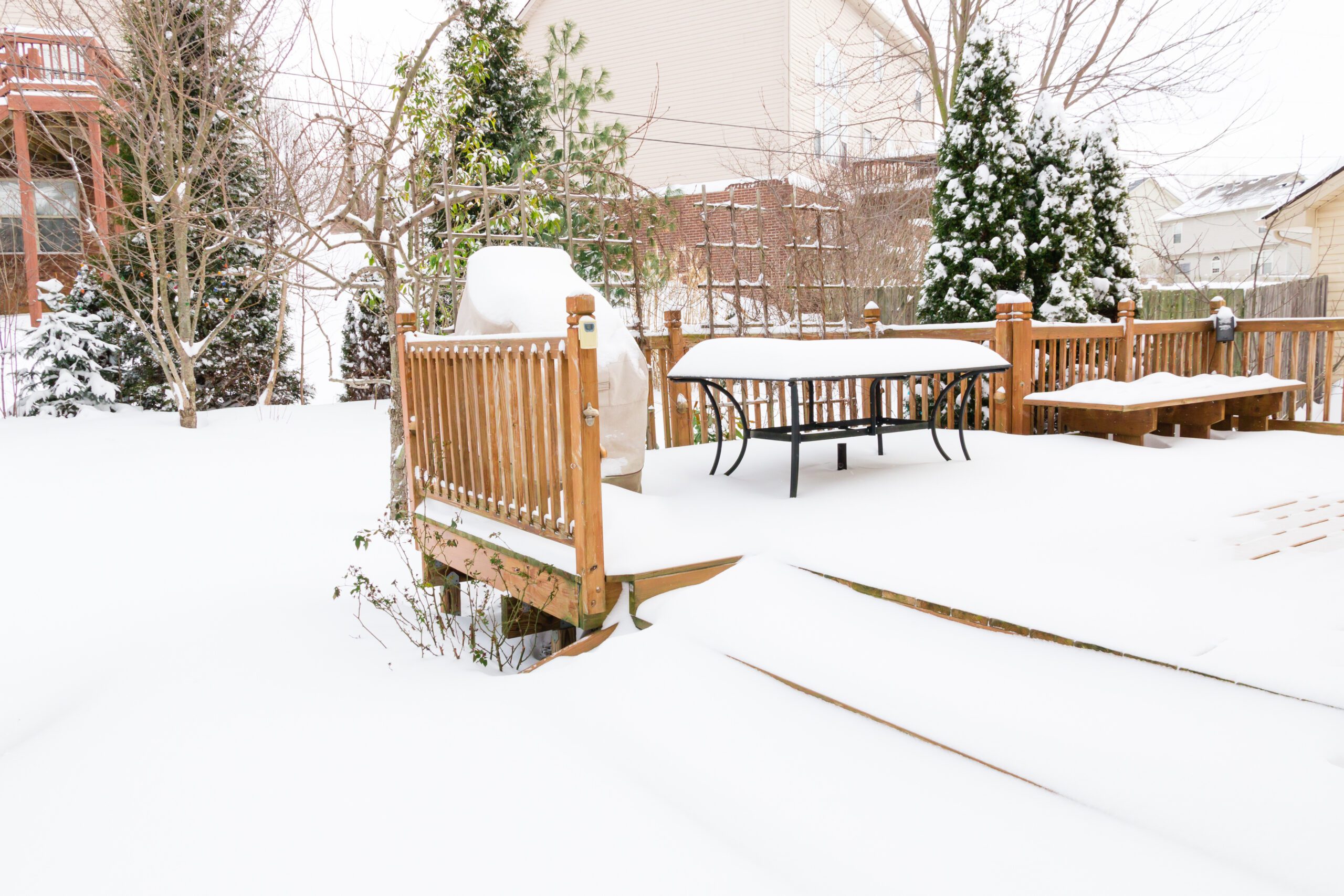
Photo by volgariver on Adobe Stock
What does Michigan’s climate demand from your deck build?
A deck built to generic national specifications will underperform in Southeast Michigan. The freeze-thaw cycle here is genuinely punishing – soil that freezes to 42 inches below grade and then thaws creates forces that work against anything not anchored deep enough or built with enough structural integrity to handle seasonal movement.
Why footing depth matters more here than most places
The 42-inch minimum footing depth isn’t an arbitrary rule. It’s the frost depth for Southeast Michigan – how far down the ground typically freezes in a hard winter. Footings that don’t reach below the frost line will heave as the soil beneath them freezes and expands, then settle as it thaws. Over a few seasons, that movement shows up as uneven decking, doors that won’t close, railings that loosen, and structural connections that begin to fail.
This is one of the most common corners cut on low-bid deck projects. Shorter footings are faster to dig and require less concrete – the savings are invisible at first and show up a few winters later. It’s worth specifically asking any contractor how deep they’re going and verifying it matches your permit drawings.
Which materials actually hold up through Michigan winters?
Composite decking handles freeze-thaw conditions significantly better than natural wood in most cases. The wood fibers and plastic that make up composite boards don’t absorb moisture the way natural lumber does, which means they’re not going through the same expansion and contraction cycle every winter. Trex and TimberTech are designed for it. Pressure-treated pine can hold up well too, but requires the maintenance schedule to stay ahead of moisture infiltration.
What fails consistently is unstained, unsealed pressure-treated lumber left to weather through Michigan winters without attention. The boards absorb moisture, freeze, thaw, and split. It’s a slow process but it’s predictable. If you choose natural wood, build the maintenance cost into your budget from the start.
Snow load and structural framing
Michigan roofs are engineered for snow load, and decks should be too. A 12×20 deck can accumulate significant weight from a heavy wet snow – the kind Southeast Michigan sees regularly in January and February. Proper joist sizing, spacing, and post-and-beam design account for that load. Your permit drawings will specify the structural requirements, and the structural inspection confirms the framing was built to match. This is another reason the permit process exists – it’s a check on whether the build is safe, not just a bureaucratic formality.
What canal and waterfront homeowners in St. Clair Shores need to know
St. Clair Shores has an extensive canal system connecting residential neighborhoods to Lake St. Clair, and many homeowners in those areas are thinking about decks that take advantage of the waterfront setting. If your property backs up to a canal or has direct lake frontage, your project may involve more than a standard city building permit.
In May 2025, the St. Clair Shores City Council was briefed by representatives of both the U.S. Army Corps of Engineers and the Michigan Department of Environment, Great Lakes and Energy (EGLE) on how they review and permit work near Lake St. Clair and connected waterways. The types of projects that typically trigger federal and state review include structures built over or adjacent to the water – and depending on how a deck is positioned relative to the water’s edge, it can fall into that category.
If your deck will extend toward, over, or near the canal or lakeshore, talk to your contractor and the SCS Building Department before you submit anything. Your project may require EGLE review and potentially Army Corps of Engineers authorization in addition to the standard city permit. Waterfront permitting runs on a different timeline than standard residential building permits, and starting that process early matters.
Canal homeowners with decks that sit squarely within the interior of the lot – well away from the water’s edge – typically work through the standard permit process without the additional state and federal layer. The line between those two situations isn’t always obvious from the property, which is exactly why it’s worth confirming with someone who knows the local requirements before breaking ground.
What should you look for when comparing deck estimates?
Getting multiple estimates is the right move, and comparing them accurately requires knowing what to look for. A $14,000 composite estimate and a $9,000 composite estimate aren’t the same project – they’re different material grades, structural approaches, or permit assumptions presented on the same piece of paper.
What a complete estimate should include
A well-prepared deck estimate specifies the decking brand and product line by name – not just “composite,” but Trex Transcend or TimberTech Legacy. It breaks out framing lumber dimensions, post sizing, railing materials, and fastener type. It addresses permits either as a line item or explicitly states they’re included. It specifies footing depth. And it lays out the inspection process and who handles coordination with the city.
Vague estimates that say “composite decking – 300 sq ft” without brand or grade leave too much room for substitution after you’ve signed. You should be able to look at two estimates side by side and compare what’s actually being installed, not just the bottom line.
Questions worth asking before you sign
- Who pulls the permit, and what’s included in the permit fees?
- How deep are the footings going?
- Who coordinates the city inspections?
- What happens if the inspector finds an issue during the post hole inspection – and how does that affect the timeline?
- What’s the workmanship warranty, and what does it cover?
- What’s the payment schedule, and is it tied to project milestones?
Red flags worth taking seriously
A contractor who says you don’t need a permit for a new deck in St. Clair Shores is either wrong or suggesting you skip required documentation. Walk away from either situation.
Extremely low bids usually reflect something – shorter footings, lighter framing lumber, unspecified decking grade, or a crew that won’t be carrying workers’ compensation insurance when they’re on your property. The permit process exists partly to catch structural shortcuts, which is one more reason unpermitted builds are worth avoiding.
And a contractor who can start your deck next week in the middle of June is usually telling you something. Reputable deck builders in this market are booked ahead during peak season. Ask about their current backlog and what the realistic start date looks like.
Why St. Clair Shores homeowners choose Leach Construction for deck projects
Leach Construction has been building and renovating homes in St. Clair Shores and across Southeast Michigan since 1965. Owners Dennis Leach and Michael Perri are involved in every project from the first estimate to the final walkthrough. Here’s what that looks like in practice for a deck project:
- ✅ We pull every permit. Dennis handles all permit applications and inspection coordination personally. You don’t navigate the Building Department – we do.
- ✅ Trex and TimberTech composite, treated lumber, and cedar. We install the materials that actually perform in Michigan winters and stand behind them with a workmanship warranty.
- ✅ 42-inch footings, every time. Our post holes meet St. Clair Shores requirements and pass inspection because they’re dug correctly from the start.
- ✅ Transparent pricing. The price we quote is the price you pay. If we find something unexpected during the build, we stop, show you what we found, and discuss options before proceeding.
- ✅ 3D renderings before we break ground. You’ll see what your deck looks like before any work starts, including site plans for permit submission.
- ✅ No driveway dumpster. Our mobile dump truck handles debris throughout the project. Your property stays clean.
- ✅ Lizzie answers the phone. Not a call center – the actual owner. Seven days a week.
See our full deck services and project gallery at leachconstruction-mi.com/services/decks.
Frequently asked questions about building a deck in St. Clair Shores
How long does it take to build a deck in St. Clair Shores?
Most custom deck projects take one to two weeks of active construction once permits are approved and materials are on site. The permit review process typically adds one to two weeks before construction begins, and during peak season that can extend to three weeks. Plan for four to six weeks from contract signing to finished deck if you’re starting in spring or early summer. Scheduling earlier in the season – or in late fall for a spring start – shortens the wait.
Can I build a deck without a permit in St. Clair Shores?
No. New deck construction requires a building permit in St. Clair Shores. Unpermitted decks can complicate home sales, create issues with homeowners insurance claims, and may need to be removed if discovered during a property transaction. The permit process also includes inspections that catch structural problems before they become expensive – it’s not just paperwork.
What is the cheapest way to build a deck in St. Clair Shores?
Pressure-treated lumber is the lowest-cost material option, typically running $25-$50 per square foot installed in Southeast Michigan. Keeping the deck close to grade level (avoiding the need for railings), using standard dimensions, and skipping add-ons like built-in seating or pergolas all keep the base cost down. That said, cutting costs on footing depth or material quality creates problems that cost more to fix later – budget for the build to be done right the first time.
How close to my property line can I build a deck in St. Clair Shores?
St. Clair Shores requires a minimum 10-foot setback from the property line for accessory structures. Corner lots may face additional restrictions and could require a variance through the Zoning Board of Appeals depending on the configuration. Confirm your specific setback with the Building Department before finalizing your deck location – your plot plan needs to show these dimensions accurately as part of the permit application.
Does adding a deck increase home value in Michigan?
Yes, though the return varies by material and market conditions. According to the 2024 Cost vs. Value Report, a 16×20 wood deck addition nationally returned roughly 82.9% of its cost at resale. Composite decks returned approximately 68.2% on a higher initial investment. In the Midwest, those figures have historically run somewhat lower, though demand for outdoor living space has strengthened returns in recent years. A properly permitted, structurally sound deck adds usable square footage that buyers expect – and an unpermitted one can actually reduce what buyers are willing to pay. Read more about deck ROI and other home improvement returns for Michigan homeowners.
Do I need permits for a deck under a certain size in Michigan?
Michigan’s building code generally requires permits for any deck attached to the house or elevated 30 inches or more above grade, regardless of size. Very small, freestanding, ground-level platforms may fall outside permit requirements in some municipalities, but St. Clair Shores follows the Michigan Residential Code strictly. When in doubt, contact the Building Department at 586-447-3340 before starting any work.
What inspections are required for a deck in St. Clair Shores?
Three inspections are required. The post hole inspection happens before concrete is poured and verifies footings reach 42 inches below grade. The structural inspection happens once framing is complete. The final inspection closes out the permit after decking, railings, and stairs are installed. Final inspections must be completed within 10 days of project completion. Your contractor coordinates scheduling with the city.
Ready to get a real estimate for your St. Clair Shores deck?
Leach Construction has been building decks for St. Clair Shores homeowners for decades. We handle the permits, pull the plans, manage the inspections, and build with materials that hold up through Michigan winters. Dennis and Michael will walk your property, give you a straight answer on what it’s going to cost, and put it in writing before you decide anything.
Call us at 586-822-1981 or visit leachconstruction-mi.com/services/decks to see recent projects and get started.