
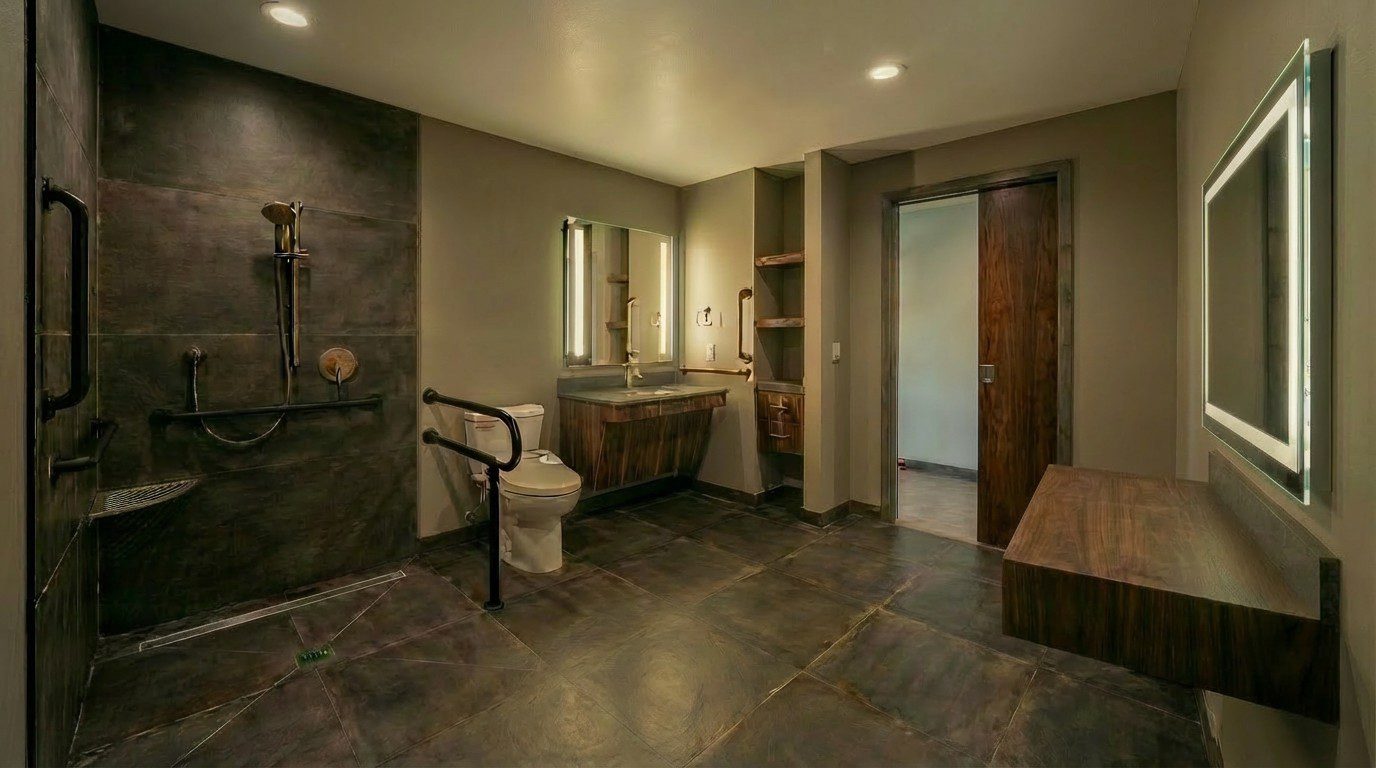
You’ve been talking about staying in your home as you get older. Maybe you’ve even sketched out plans on a napkin for bringing your parents into a new addition, or wondered how you’d make that upstairs bathroom safe enough for your mom who’s started using a walker.
For nearly 60 years, Leach Construction has helped Metro Detroit families turn these conversations into reality. As we look toward 2026, more homeowners across Wayne, Oakland, Macomb, St. Clair, and Washtenaw counties are thinking ahead, designing homes that work for every generation under one roof while supporting safe, comfortable aging in place.
The concept of aging in place, safely and comfortably remaining in your own home as you grow older, has moved from “nice to have” to essential planning, and major organizations now publish checklists focused specifically on safer bathrooms for older adults. At the same time, multigenerational households are becoming increasingly common across Michigan, driven by practical economics and the desire to keep family close.
Leach Construction specializes in custom home additions and complete interior renovations, including aging in place bathroom remodels that blend safety with style. Whether you’re planning a main floor primary suite addition or transforming an existing space into a senior-friendly bathroom, our team understands what it takes to future-proof your Metro Detroit house.
Why Multi-Generational Living and Aging in Place Are Growing in 2026
The shift back to extended families living under one roof is not a temporary trend; it is a response to real economic and social pressures that are reshaping how we think about our homes.
High housing costs and elevated interest rates make it more attractive for families to combine resources and share a single property. Many buyers now look for homes that can comfortably support multiple generations, often with separate suites or flexible spaces that can adapt as needs change.
Caregiving is another powerful driver. Sharing a home with aging parents allows families to provide day-to-day support and stay closely involved in their care. For older adults, living in a supportive environment surrounded by family can reduce loneliness while improving safety, since loved ones can monitor health and respond quickly if something goes wrong.
To make this work long term, the house itself must be adapted to serve different generations comfortably, with both welcoming shared spaces and private areas where each person can retreat. This is where thoughtful universal design principles come into play, creating spaces that work for people of all ages and abilities.
Multigenerational Home Addition Design in Metro Detroit
Expanding your home’s living space is often the best way to accommodate multiple generations while still respecting each person’s autonomy and privacy. Thoughtful design can give everyone a comfortable place to live without sacrificing the character of your existing home.
Leach Construction manages complex addition projects from planning through completion, ensuring new spaces tie seamlessly into your home’s structure and architecture. Our team handles everything from permit applications to final inspections, working within Michigan’s building codes to create additions that feel like they’ve always been part of your house.
Main Floor Primary Suite and In-Law Suite Additions
Adding a primary bedroom and full bathroom on the first floor eliminates the strain of climbing stairs for older adults and makes the home more accessible if mobility issues develop in the future. A “main floor primary suite” has become one of the most requested layouts for homeowners planning ahead.
This type of room addition creates true independence. Your aging parent or adult child gets their own bedroom, a private accessible bathroom with features like a walk-in shower or comfort-height toilet, and often a small sitting area or even a kitchenette. This setup respects everyone’s need for personal space while keeping family members close enough to help when needed.
When Adding Space Makes Sense
Sometimes the best solution for multigenerational living is adding a main floor primary suite so aging family members don’t need to navigate stairs. Flexible space design is the secret to homes that adapt as families change: a guest room today might become an in-law suite, home office, or caregiver’s room tomorrow.
When you’re already doing construction for an addition, building in accessibility features costs far less than retrofitting later. Consider:
- Wider doorways (at least 32 inches) and generous clearances in halls and rooms.
- Reinforced walls for future grab bars in bathrooms and near beds.
- Bathroom layouts that allow for wheelchair or walker access.
Some families take this concept further with accessory dwelling units (ADUs): separate living spaces that might share a wall with the main house but include their own entrance, small kitchen, and accessible bathroom. Whether it’s part of a new primary suite or an ADU, the bathroom is typically the most critical space in any addition. The design should incorporate the universal design principles covered in the next section.
Aging in Place Bathroom Remodels for Seniors
Bathrooms are where many home accidents happen, especially for older adults. Wet surfaces, hard tile, and tight layouts create conditions where slips and falls are more likely. Even a minor fall can have serious health consequences, which is why bathrooms consistently rank as a top priority for aging in place remodeling.
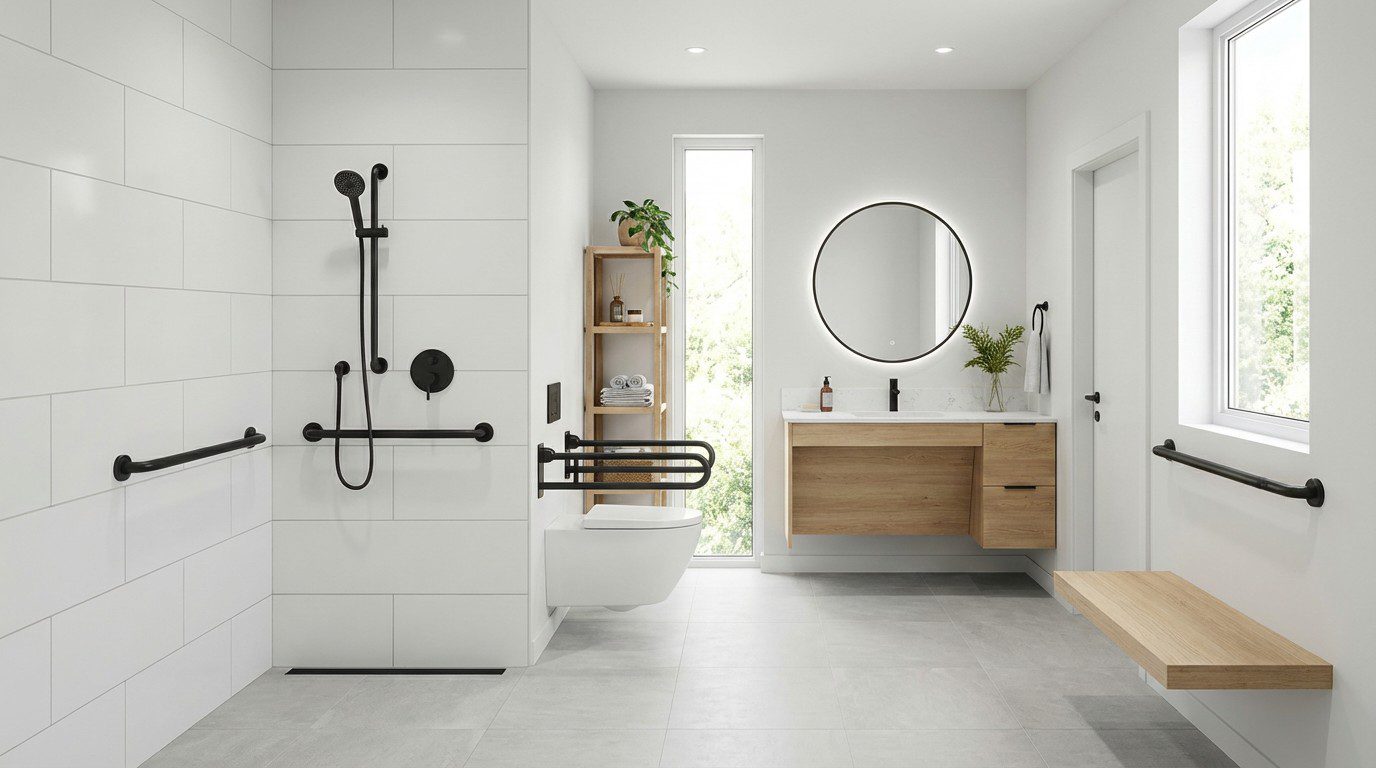
Here’s what many homeowners don’t realize: modern accessible bathrooms don’t have to look clinical or institutional. With the right materials and layout, a bathroom can be both beautiful and highly functional for people of all ages. Thoughtful bathroom design focuses on preventing accidents rather than reacting to them, blending safety features into a cohesive, attractive space.
Leach Construction handles complete bathroom transformations, an ideal type of project for the winter months (November through April), when interior work can move forward efficiently while exterior work slows down. Our team has transformed numerous Metro Detroit bathrooms into spaces that support independence and safety.
Shower and Bathing Options
When it comes to safe bathing, you have several options that balance accessibility with your preferences:
- Curbless shower (barrier-free shower): A curbless shower eliminates the high edge you’d normally step over, creating seamless entry that works whether you’re walking, using a walker, or need wheelchair access.
- Roll-in shower: For maximum accessibility, a roll-in shower provides completely level entry with enough open space inside (typically 36 by 60 inches minimum) for wheelchair users to turn comfortably.
- Low-curb shower: This option offers a middle ground with a threshold only an inch or two high rather than the standard four to six inches. It contains water better while still being much easier to navigate than a traditional tub or shower.
- Walk-in bathtub: A walk-in tub allows users to enter through a watertight door without stepping over a high wall, reducing the risk of slips and falls. These work well for people who prefer baths but need easier access than climbing into a standard tub provides.
Regardless of which option you choose, include a shower bench or fold-down shower seat so users can sit while bathing. Position these at a comfortable height (17–19 inches) and ensure they’re securely anchored. A handheld showerhead adds flexibility for showering while seated or standing.
Flooring, Fixtures, and Smart Storage
- Non-slip flooring: The shower floor and bathroom flooring throughout need careful consideration. Non-slip flooring is essential to help prevent falls, especially in wet areas. Textured floor tile with minimal grout lines provides traction without creating cleaning headaches. Matte finishes usually perform better than glossy surfaces that can become slippery when wet. Large-format tiles or solid surface materials on shower walls minimize grout lines and make cleaning easier.
- Comfort-height toilet: A comfort-height toilet sits at 17 to 19 inches high—about the same height as a standard chair—making it easier for older users to sit down and stand up without putting extra strain on knees and hips. This higher toilet contrasts with standard-height fixtures (around 15 inches) that can be uncomfortable for anyone with limited mobility or arthritis.
- Grab bars: The toilet area needs adequate floor space for safe transfers, plus strategically placed grab bars for support. Modern grab bars come in finishes and styles that blend with faucets and hardware, and some double as towel bars, enhancing the bathroom design rather than looking like medical equipment. Install grab bars securely (mounted into wall studs or with proper backing) in showers, tubs, and next to toilets. When remodeling, it’s smart to add wall blocking even if you’re not ready to install bars immediately.
- Easy-reach storage: Open shelves, pull-out drawers, and accessible niches positioned to minimize bending or reaching overhead keep everyday items within safe reach.
- Floating vanity: A floating vanity (wall-mounted instead of sitting on the floor) can make a bathroom feel larger while accommodating the wheels of a walker underneath. Standard vanity height is 30–32 inches, but universal design often calls for 34 inches to reduce bending.
Layout, Lighting, and Modern Features
An accessible bathroom layout should allow for a 5-foot turning radius for wheelchair maneuverability, roughly 60 inches of clear floor space. The bathroom door should be at least 32 inches wide (36 inches is better), and it should swing out rather than into the bathroom to avoid blocking access if someone falls inside. Pocket doors that slide into the wall are another great option because they eliminate the swing radius entirely.
Lighting and visibility: Good lighting is one of the most cost-effective safety features you can add. Adequate lighting improves visibility and reduces fall risk by eliminating shadows and dark corners. Consider:
- Ambient ceiling fixtures for overall illumination.
- Task lighting around the vanity and mirror at face level.
- Motion-sensor lights that turn on automatically when someone enters.
- Nightlights or low-level lighting for safe nighttime navigation.
Many homeowners prefer warm-neutral light in the 3,000–4,000 Kelvin range for a balance between clarity and comfort.
Smart features and modern conveniences: Smart technology is finding its way into aging in place bathrooms through features that make daily routines easier, such as:
- Touchless faucets and lights that reduce germ spread and eliminate the effort needed to operate traditional controls, helpful for anyone with arthritis or limited grip strength.
- Bidet toilets or bidet seats that provide independence for users who struggle with traditional bathroom tasks, often with warm water, adjustable pressure, and heated seats.
- Voice-activated mirrors, fans, or lighting systems that help people with limited mobility control their environment without struggling with switches.
Small but important details:
- Use contrasting colors between walls, floors, and fixtures to help people with vision changes distinguish different surfaces and navigate more confidently.
- Replace knob-style faucets with lever handles that require less grip strength and dexterity.
- Remove loose rugs, mats, and clutter to create clear pathways and reduce tripping hazards.
Plan Your Aging in Place Remodel with Leach Construction
Aging in place and multigenerational design can offer a strong return on investment because homes that are safer, more flexible, and easier to navigate appeal to a wide range of buyers. Features like main floor suites, wider doorways, and accessible bathrooms make a property more attractive to retirees, families caring for older relatives, and buyers planning ahead for their own long-term needs.
When you’re already remodeling, it’s far more cost-effective to plan for accessibility while the walls are open. Adding wall blocking for future grab bars, adjusting door widths, or installing a curbless shower during a planned project costs a fraction of what these same updates would run as standalone work later.
Working with a contractor experienced in universal design bathroom features helps ensure your renovation blends functionality with aesthetics. You shouldn’t have to sacrifice style for safety – done right, accessibility features enhance your bathroom rather than making it feel institutional.
Leach Construction LLC is a family-owned residential construction business serving Metro Detroit, committed to environmentally responsible upgrades, energy-efficient solutions, and custom features tailored to your lifestyle. As a licensed Michigan Residential Builder (#262000527), Leach ensures every project meets or exceeds current Michigan building codes and best practices.
If you’re ready to explore an aging in place bathroom remodel or multigenerational home addition that supports safe, comfortable living for every generation in your family, Leach Construction is prepared to help. Interior projects scheduled between November and April can often take advantage of more flexible winter availability, allowing our team to focus on transforming your space while exterior work is on pause.
Contact us today to discuss how we can help you design a home that grows with your family, a place where everyone can age comfortably, safely, and independently in the house they love.